
Online Tajweed Course
Learn to recite the Quran correctly, letter by letter. A qualified teacher listens to you live and takes you from makharij to madd and waqf, at your own pace.
- Live correction
- Structured syllabus
- Female teachers for sisters
- From £29 a month
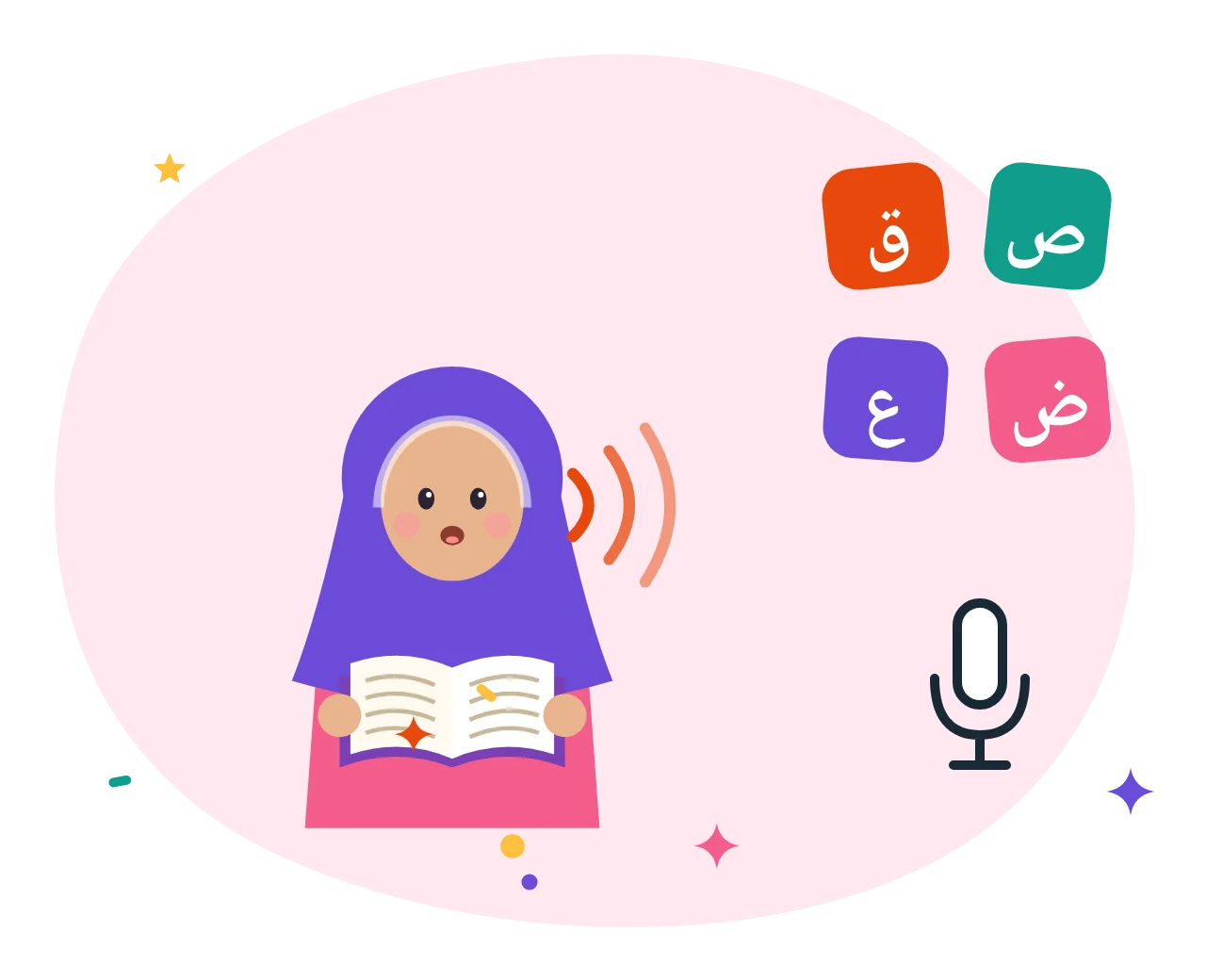
What is Tajweed, and why learn it with a teacher?
Tajweed means reciting the Quran the way it was taught by the Prophet ﷺ: giving every letter its correct sound and its qualities, and following the rules for how letters join, stretch and stop. Allah says:
Tajweed has always been passed on by listening to a teacher and being corrected, not only by reading a book. That is why every class in this course is live and one-to-one: you recite, and your teacher hears the small mistakes that you cannot hear yourself.
Course syllabus
The course moves in four stages. Your free trial includes a recitation check so you start at the right one.
| Stage | What you study | By the end you can |
|---|---|---|
| 1. Foundations | Makharij (where each letter comes from), the qualities of letters (sifaat), heavy and light letters | Pronounce every Arabic letter correctly |
| 2. Core rules | Noon sakin and tanween (izhar, idgham, iqlab, ikhfa), meem sakin, ghunnah, qalqalah | Apply the most common rules as you read |
| 3. Madd and stopping | Types of madd and their lengths, how to stop and restart, waqf signs in the mushaf | Recite smoothly with correct lengths and stops |
| 4. Recitation practice | Applying everything in whole surahs, starting with Juz Amma; fixing habitual mistakes | Recite fluently and confidently |
Mistakes our teachers correct most often
English and Urdu speakers tend to make the same handful of mistakes, because their languages do not have some Arabic sounds:
| Letters | The mistake | The fix |
|---|---|---|
| ث · س · ص | All read as a plain “s” | ث is a soft “th”, ص is a heavy s with a full mouth |
| ذ · ز · ض · ظ | All read as “z” | Each has its own place in the mouth; ض comes from the side of the tongue |
| ح · ه | Both read as an English “h” | ح is a strong breathy sound from the middle of the throat |
| ع · ء | ع dropped or read as a vowel | ع is squeezed from the middle of the throat |
| ق · ك | Both read as “k” | ق comes from further back and is heavy |
| Short vowels | Stretched like long vowels | Short vowels stay short; only madd letters are stretched |
Practise these pairs at home with the “Similar letters” drill in our free Arabic alphabet tool.
Who this course is for
- Children who have finished the Noorani Qaida and read the Quran, but need their recitation polished.
- Adults who read without Tajweed and want to recite properly, especially in Salah.
- Students preparing for Hifz, because it is far easier to memorise correctly than to fix mistakes later. See the online Hifz course.
- Sisters who prefer a female teacher.
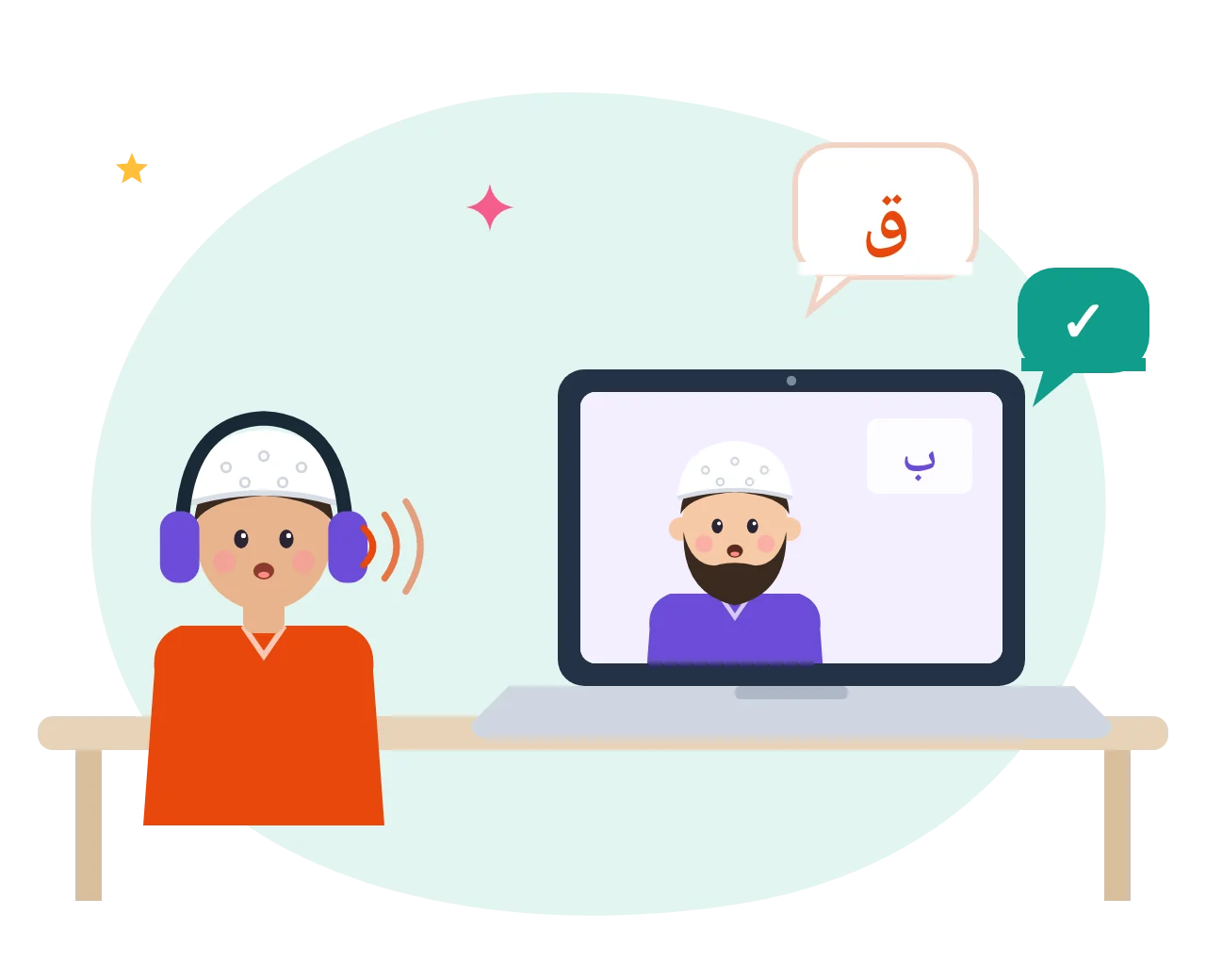
How the classes work
Fees
Good if you already read fluently.
Steady progress through the syllabus.
Fastest, ideal before starting Hifz.
All classes are one-to-one and 30 minutes. See the fees page or start with 3 free classes.
Frequently asked questions
What is the difference between a Quran reading course and a Tajweed course?
A reading course teaches you to read the Arabic words of the Quran. A Tajweed course teaches you to recite them correctly: the exact sound of each letter, how letters affect each other, how long to stretch vowels and where to stop.
Is learning Tajweed obligatory?
Scholars explain that every reciter must avoid clear mistakes that change a letter or a vowel, because these can change the meaning. The finer rules perfect the recitation and are strongly encouraged. A teacher helps you with both.
How long does it take to learn Tajweed?
Most students who already read fluently can learn and apply the core rules in about three to six months with regular classes. Perfecting recitation is a longer journey that continues with practice.
Can children learn Tajweed?
Yes. Our teachers correct pronunciation from a child’s first lesson. Once a child reads fluently, they can learn the rules by name in a structured Tajweed course.
Can I learn Tajweed online, without a teacher in the room?
Yes, as long as a qualified teacher listens to you live. Tajweed is learned by listening and being corrected, which works very well in a one-to-one video class.
Can I try a Tajweed class for free?
Yes. Your 3 free trial classes include a recitation check so the teacher can tell you which level to start at. Book them here.
Recite the Quran the way it was revealed
Book three free classes. Your teacher will check your recitation and show you exactly what to work on first.
More courses and free practice
Last updated: October 2026