
Madni Qaida in Urdu Page 28 – Sabaq 12: Ikhfa Words and Tanween Phrases
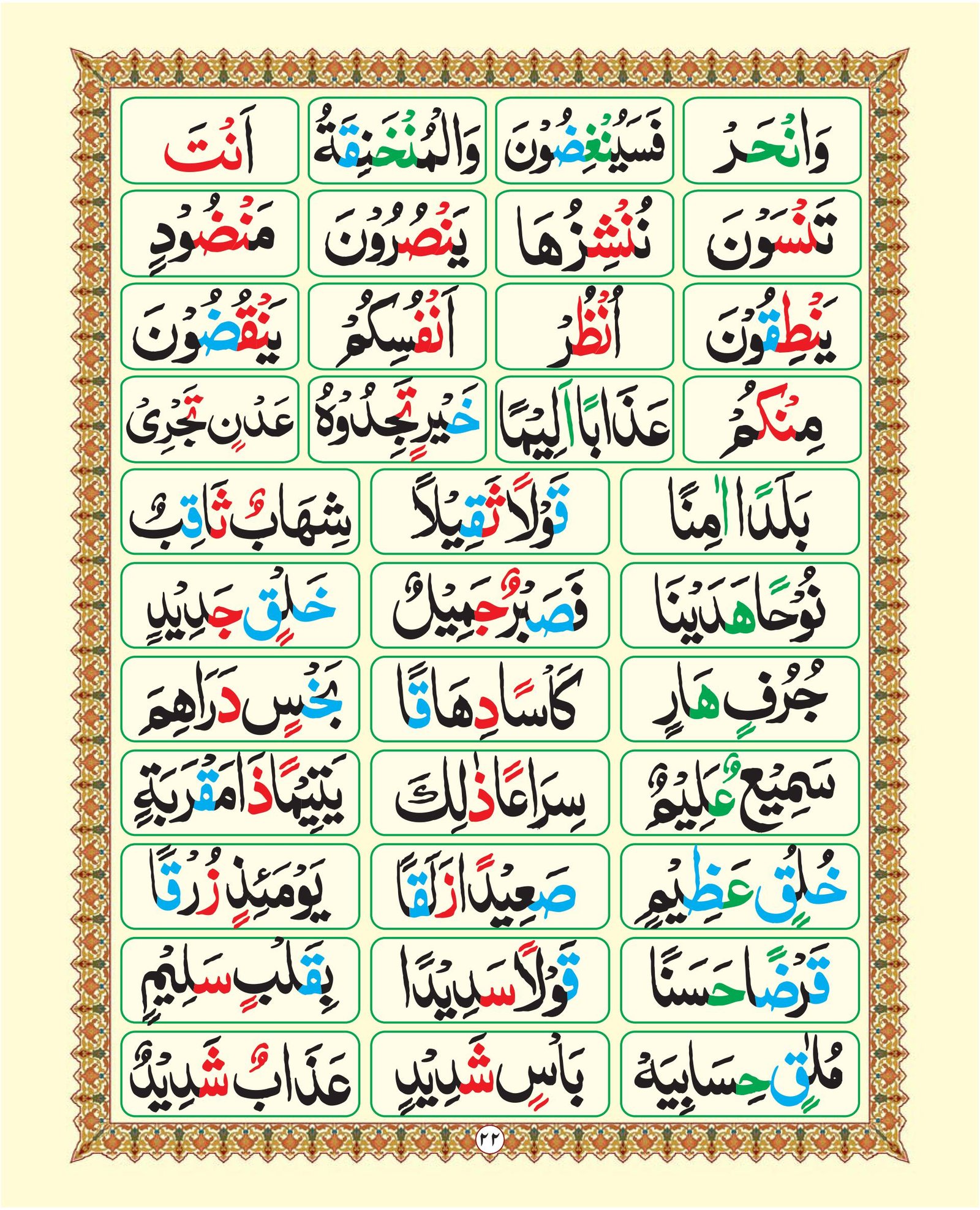
Welcome to Madni Qaida in Urdu Page 28 at Learning Quraan. Page 28 practises Noon Saakin inside words and Tanween before the next word.
This page is part of Sabaq 12: Noon Saakin and Tanween (Izhar and Ikhfa). See every page on the Madni Qaida in Urdu index, or learn with a teacher in our online Quran courses.
What is on Madni Qaida in Urdu Page 28?
- Words such as وانحر, تنسون and منضود.
- Phrases such as بلدًا امنًا and قولًا ثقيلًا.
- Phrases such as سميعٌ عليمٌ and خلقٍ عظيمٍ.
How to Practise This Page
- Before a throat letter (ء ه ع ح غ خ), say the Noon clearly with no Ghunnah: Izhar.
- Before any of the 15 Ikhfa letters, hide the Noon with a Ghunnah of about one Alif.
- Mark the letter after each Noon Saakin or Tanween before you read the word.
Madni Qaida in Urdu: Page Directory
Jump to any page of the Urdu edition, or go back to the full page index.
Page 01
Page 02
Page 03
Page 04
Page 05
Page 06
Page 07
Page 08
Page 09
Page 10
Page 11
Page 12
Page 13
Page 14
Page 15
Page 16
Page 17
Page 18
Page 19
Page 20
Page 21
Page 22
Page 23
Page 24
Page 25
Page 26
Page 27
Page 28
Page 29
Page 30
Page 31
Page 32
Page 33
Page 34
Page 35
Page 36
Page 37
Page 38
Page 39
Page 40
Page 41
Page 42
Page 43
Page 44
Page 45
Page 46
Page 47
Page 48
Page 49
Page 50
Page 51
Page 52
Page 53
Page 54
Page 55
Explore Our Free Islamic Tools
Enhance your daily Islamic practices with our online interactive Islamic Tools:- Count daily recitations on our Digital Tasbih Counter.
- Find the Qibla direction with our Qibla Finder.
- Convert dates with the Hijri Date Converter.
- Search meaningful names with our Islamic Names Finder.
- Calculate obligations with the Zakat Calculator and Islamic Inheritance Calculator.
Get One-on-One Tutoring Support
Learn more about our qualified Quran teachers on our About Us page, review pricing on our Fee structure page, or visit our Contact Us page to book a free trial class.
← Previous: Page 27👉 Proceed to Page 29 – Sabaq 12: Phrases
Page images: Madani Qa’idah, published by Maktaba-tul-Madinah (Dawat-e-Islami), shown here as a study reference.