
Idgham in Tajweed: Letters, Rules and Examples
Learn idgham, the rule of merging: the six letters of يرملون, idgham with and without ghunnah, the four-word exception and examples from the Quran.
What is idgham?
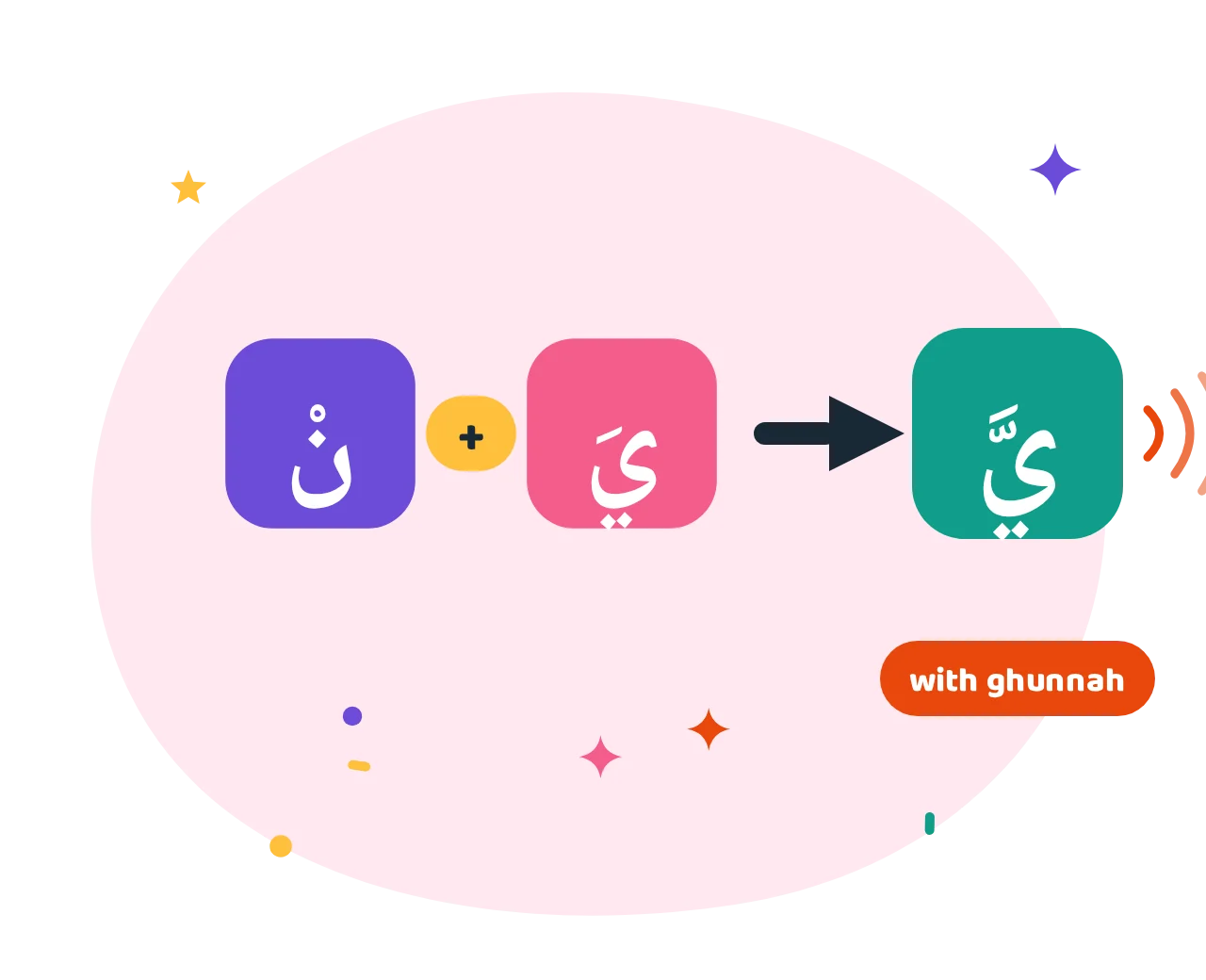
Idgham (إدغام) means “to merge” or “to insert one thing into another”. In Tajweed it means that a letter with sukoon is merged into the next letter so that the two are pronounced as one stressed letter, as if it had a shaddah.
The most common idgham is the one of noon sakin and tanween. It happens when noon sakin or tanween at the end of a word is followed by one of six letters at the start of the next word.
Remember them with the word يَرْمَلُون (yarmaloon).
Idgham with ghunnah (ي ن م و)
Before ي ن م و (remembered as يَنْمُو), merge the noon into the next letter and keep the nasal sound for about two counts.
| Example | Where | What happens |
|---|---|---|
| مَنْ يَقُولُ | Al-Baqarah 2:8 | Read “may-yaqoolu” |
| مِنْ نِعْمَةٍ | An-Nahl 16:53 | Read “min-ni‘matin” |
| مِنْ مَاءٍ | Al-Baqarah 2:164 | Read “mim-maa’in” |
| مِنْ وَالٍ | Ar-Ra'd 13:11 | Read “miw-waal” |
| خَيْرًا يَرَهُ | Az-Zalzalah 99:7 | Tanween: “khairay-yarah” |
Idgham without ghunnah (ل ر)
Before ل and ر, merge the noon completely. No nasal sound is left.
| Example | Where | What happens |
|---|---|---|
| مِنْ رَبِّهِمْ | Al-Baqarah 2:5 | Read “mir-rabbihim” |
| هُدًى لِلْمُتَّقِينَ | Al-Baqarah 2:2 | Read “hudal-lil-muttaqeen” |
| غَفُورٌ رَحِيمٌ | Al-Baqarah 2:173 | Read “ghafoorur-raheem” |
The exception: same word
Idgham of noon sakin needs two separate words. When the noon and the next letter are in the same word, the noon is read clearly. This happens in only four words in the Quran:
| Example | Where | What happens |
|---|---|---|
| الدُّنْيَا | Al-Baqarah 2:85 | Noon read clearly |
| بُنْيَانٌ | As-Saff 61:4 | Noon read clearly |
| قِنْوَانٌ | Al-An'am 6:99 | Noon read clearly |
| صِنْوَانٌ | Ar-Ra'd 13:4 | Noon read clearly |
Other kinds of idgham
Idgham also happens between other letters. These are more advanced, but you will meet them in your recitation:
| Kind | When | Example | Where |
|---|---|---|---|
| Same letters (mutamathilayn) | A sakin letter followed by the same letter | اضْرِبْ بِعَصَاكَ | Al-Baqarah 2:60 |
| Same letters | رَبِحَتْ تِجَارَتُهُمْ | Al-Baqarah 2:16 | |
| Same place in the mouth (mutajanisayn) | Letters from the same makhraj, e.g. د into ت | قَدْ تَبَيَّنَ | Al-Baqarah 2:256 |
| Same place in the mouth | ذ into ظ | إِذْ ظَلَمُوا | An-Nisa 4:64 |
| Close letters (mutaqaribayn) | ل into ر | وَقُلْ رَبِّ | Al-Isra 17:24 |
| Close letters | ق into ك | نَخْلُقْكُمْ | Surah 77 77:20 |
Practise idgham
Short surahs are the easiest place to practise. Read these with a teacher or alongside a recitation you trust:
| Example | Where | Listen for |
|---|---|---|
| يَكُنْ لَهُ | Al-Ikhlas 112:4 | No ghunnah before laam |
| خَيْرًا يَرَهُ | Az-Zalzalah 99:7 | Ghunnah before yaa |
| شَرًّا يَرَهُ | Az-Zalzalah 99:8 | Ghunnah before yaa |
| مِنْ رَبِّهِمْ | Al-Baqarah 2:5 | No ghunnah before raa |
Common mistakes
- Pronouncing the noon before merging, as in “min rabbihim” instead of “mir-rabbihim”.
- Adding ghunnah before ل and ر. These two letters take no ghunnah.
- Making the ghunnah too short before ي ن م و. Hold it for about two counts.
- Merging in الدنيا and similar words, where the noon must stay clear.
Frequently asked questions
What are the letters of idgham?
Six letters, remembered by the word يَرْمَلُون: ي ر م ل و ن.
What is the difference between idgham with and without ghunnah?
With ghunnah (ي ن م و) you keep a nasal sound of two counts while merging. Without ghunnah (ل ر) the noon merges completely and no nasal sound is heard.
Why is الدنيا not read with idgham?
Idgham of noon sakin only happens between two words. In الدنيا the noon and the ي are in the same word, so the noon is read clearly. This is called izhar mutlaq.
What is idgham shafawi?
It is the merging of a meem sakin into a following meem, with ghunnah, as in كم من. See the meem sakin rules.
Is idgham the same as a shaddah?
In effect, yes: the second letter is read as if it carries a shaddah. Many mushafs show this by putting the shaddah on the second letter and leaving the noon without a sukoon.
Sources
- Tuhfat al-Atfal, Shaikh Sulayman al-Jamzuri, verses 9–12.
- al-Muqaddimah al-Jazariyyah, Imam Ibn al-Jazari, verses 66–67.
- Faizan-e-Tajweed, Dawat-e-Islami (Al-Madinah-tul-Ilmiyyah), p. 24 (izhar mutlaq).
- Quran examples: the Tanzil Quran text (Hafs), each with its surah and verse.
Learn Tajweed with a teacher who listens to you
Reading about a rule is the first step. Hearing it corrected in your own recitation is what makes it stick. Try three free one-to-one classes.
More Tajweed rules
Last updated: October 2026