
Ikhfa in Tajweed: The 15 Letters with Examples
Ikhfa means hiding the noon. Learn the 15 ikhfa letters, an easy way to remember them, how to pronounce the ghunnah and examples from the Quran.
What is ikhfa?
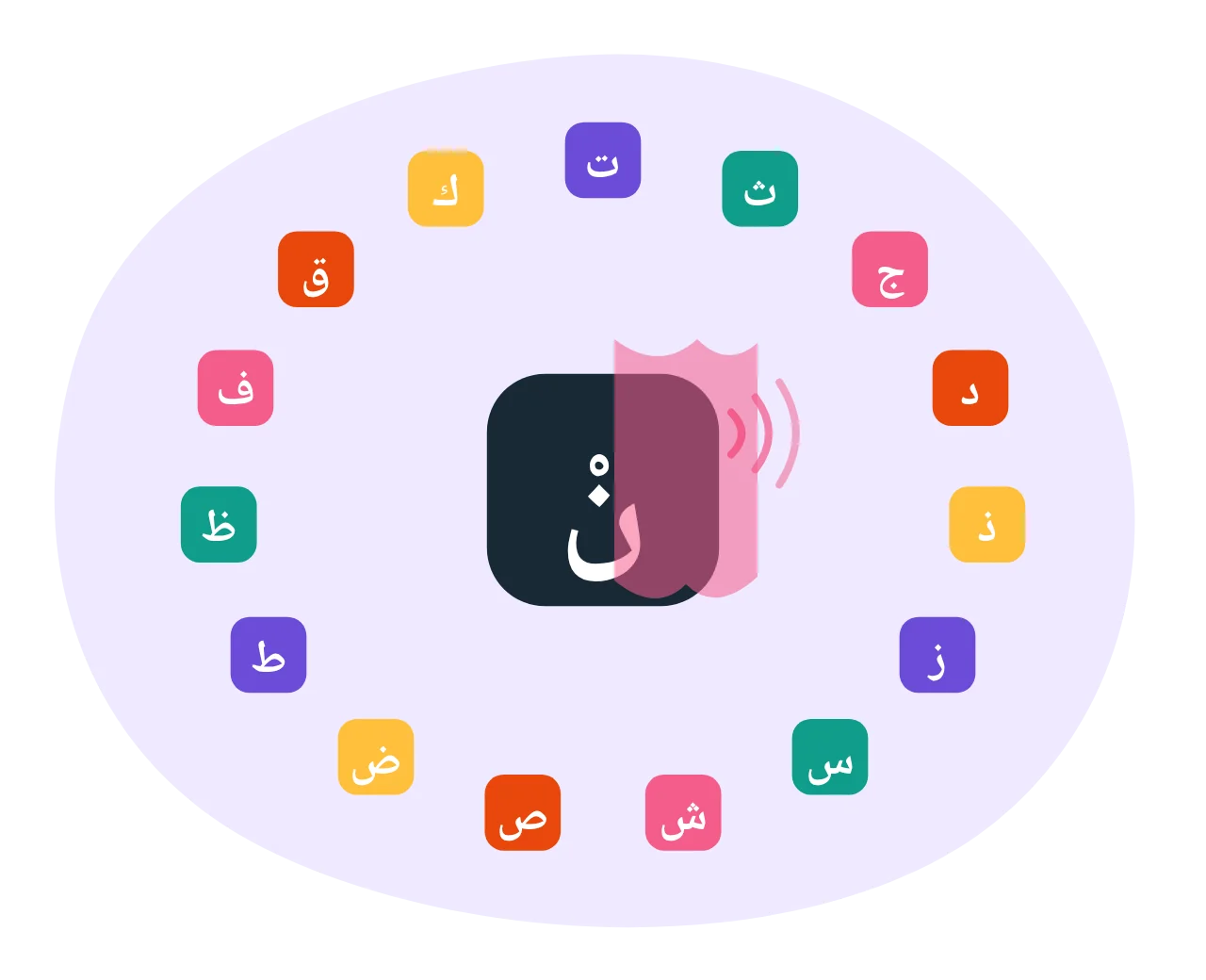
Ikhfa (إخفاء) means “to hide”. When noon sakin or tanween is followed by one of 15 letters, the noon is neither said clearly nor merged. Instead, the tongue moves towards the next letter while a nasal ghunnah of about two counts is heard through the nose.
This is sometimes called ikhfa haqiqi (true ikhfa), to tell it apart from the ikhfa of meem sakin.
The 15 letters of ikhfa
To remember them, the first letter of each word in this line from the Tuhfat al-Atfal is an ikhfa letter:
صِفْ ذَا ثَنَا كَمْ جَادَ شَخْصٌ قَدْ سَمَا
دُمْ طَيِّبًا زِدْ فِي تُقًى ضَعْ ظَالِمَا
Examples from the Quran
| Example | Where | What happens |
|---|---|---|
| يُنْفِقُونَ | Al-Baqarah 2:3 | Before faa, inside one word |
| مِنْ قَبْلِكَ | Al-Baqarah 2:4 | Before qaaf |
| وَأَنْتُمْ | Al-Baqarah 2:22 | Before taa, inside one word |
| مَنْ ذَا | Al-Baqarah 2:255 | Before dhaal |
| عَنْ صَلَاتِهِمْ | Al-Ma'un 107:5 | Before saad |
| مِنْ شَرِّ | Al-Falaq 113:2 | Before sheen |
How to pronounce ikhfa
Is ikhfa always the same?
The nasal sound follows the letter after it. Before a heavy letter such as ق ص ض ط ظ the ghunnah sounds fuller and deeper; before a light letter such as ت س ك it sounds lighter. Teachers also explain that the hiding is strongest before letters far from the noon (like ق ك) and lightest before letters close to it (like ت د ط).
Practise ikhfa
Short surahs are the easiest place to practise. Read these with a teacher or alongside a recitation you trust:
| Example | Where | Listen for |
|---|---|---|
| مِنْ جُوعٍ | Quraysh 106:4 | Hidden noon before jeem |
| مِنْ شَرِّ | Al-Falaq 113:2 | Hidden noon before sheen |
| مِنْ شَرِّ | An-Nas 114:4 | The same rule again |
Common mistakes
- Saying a full “n” by pressing the tongue on the roof of the mouth.
- Turning it into “ng” as in the English word “sing”, especially before ك and ق.
- Cutting the ghunnah short, or stretching it much longer than two counts.
- Adding a vowel after the noon before the next letter.
Frequently asked questions
How many ikhfa letters are there?
Fifteen: ت ث ج د ذ ز س ش ص ض ط ظ ف ق ك. They are all the letters that are not used for izhar, idgham or iqlab.
How do I remember the ikhfa letters?
A classic line of Tajweed poetry, from the Tuhfat al-Atfal, begins each word with one of the letters: صِفْ ذَا ثَنَا كَمْ جَادَ شَخْصٌ قَدْ سَمَا ، دُمْ طَيِّبًا زِدْ فِي تُقًى ضَعْ ظَالِمَا.
How long is the ghunnah in ikhfa?
About two counts.
What is the difference between ikhfa and idgham?
In idgham the noon disappears completely into the next letter. In ikhfa it is half way: the noon is hidden, the tongue does not press on its place, but its nasal sound remains.
What is ikhfa shafawi?
A different rule: a meem sakin hidden before the letter ب, as in ترميهم بحجارة. See the meem sakin rules.
Sources
- Tuhfat al-Atfal, Shaikh Sulayman al-Jamzuri, verses 14–16 (the fifteen letters).
- al-Muqaddimah al-Jazariyyah, Imam Ibn al-Jazari, verse 68.
- Faizan-e-Tajweed, Dawat-e-Islami (Al-Madinah-tul-Ilmiyyah), p. 24.
- Quran examples: the Tanzil Quran text (Hafs), each with its surah and verse.
Learn Tajweed with a teacher who listens to you
Reading about a rule is the first step. Hearing it corrected in your own recitation is what makes it stick. Try three free one-to-one classes.
More Tajweed rules
Last updated: October 2026