
Meem Sakin Rules: Ikhfa, Idgham and Izhar Shafawi
The three rules of meem sakin, ikhfa shafawi, idgham shafawi and izhar shafawi, explained simply with examples from the Quran.
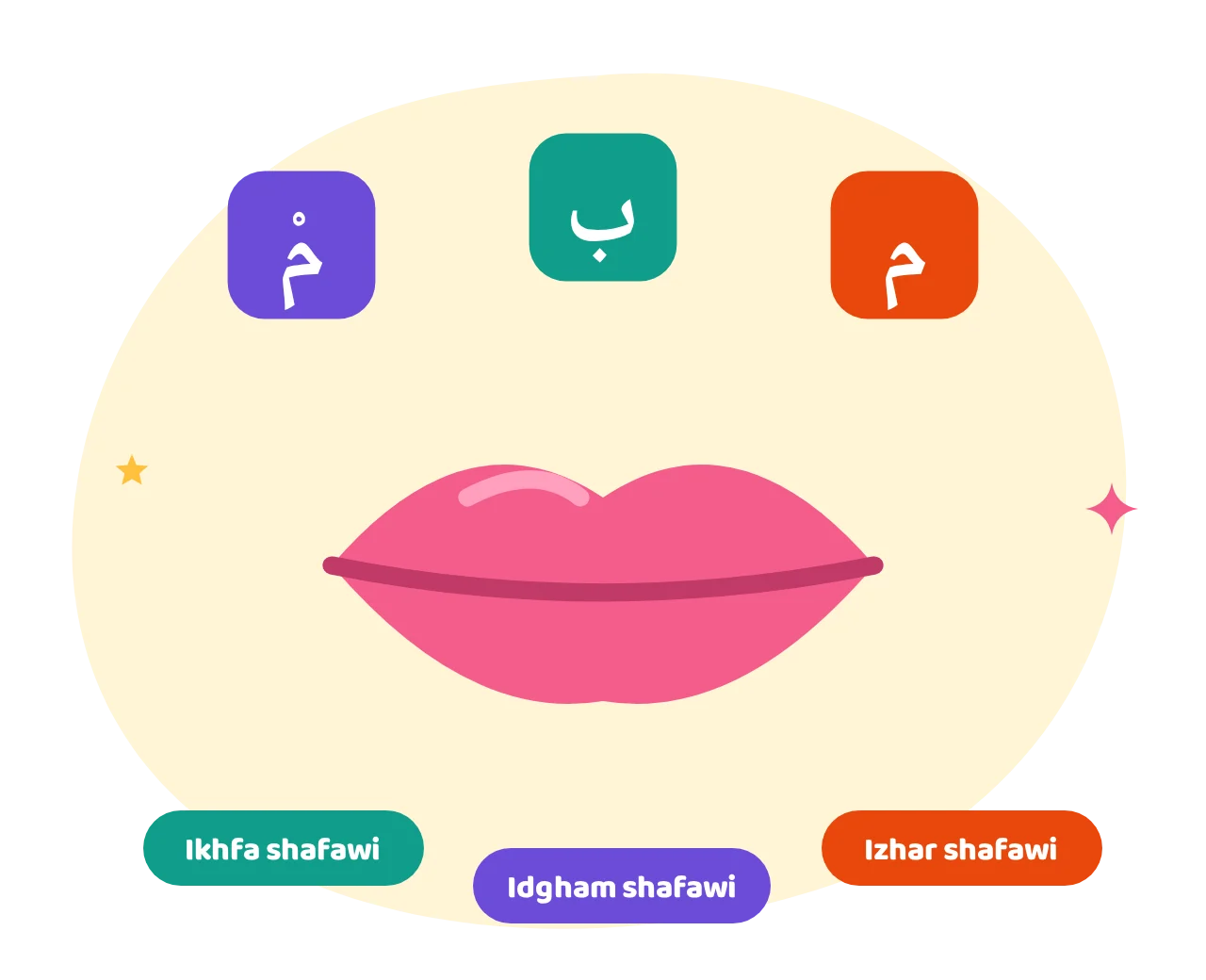
What is meem sakin?
Meem sakin is a meem with no vowel (مْ). Its rule depends on the letter after it. There are three rules, and all three are called shafawi (“of the lips”), because meem is a lip letter.
| Rule | Next letter | What you do |
|---|---|---|
| Ikhfa shafawi | ب | Hide the meem with ghunnah, 2 counts |
| Idgham shafawi | م | Merge into the next meem with ghunnah, 2 counts |
| Izhar shafawi | Every other letter | Say the meem clearly |
1. Ikhfa shafawi: before ب
| Example | Where | What happens |
|---|---|---|
| تَرْمِيهِمْ بِحِجَارَةٍ | Al-Fil 105:4 | Meem hidden with ghunnah |
| وَهُمْ بِالْآخِرَةِ | An-Naml 27:3 | Meem hidden with ghunnah |
| وَمَا هُمْ بِمُؤْمِنِينَ | Al-Baqarah 2:8 | Meem hidden with ghunnah |
2. Idgham shafawi: before م
| Example | Where | What happens |
|---|---|---|
| كَمْ مِنْ | Al-Baqarah 2:249 | Two meems merge, with ghunnah |
| أَمْ مَنْ | An-Nisa 4:109 | Two meems merge, with ghunnah |
3. Izhar shafawi: everything else
| Example | Where | What happens |
|---|---|---|
| أَمْ لَمْ | Al-Baqarah 2:6 | Clear meem before laam |
| وَهُمْ فِيهَا | Al-Baqarah 2:25 | Clear meem before faa: take care |
| عَلَيْهِمْ وَلَا | Al-Fatihah 1:7 | Clear meem before waaw: take care |
| وَبِالْآخِرَةِ هُمْ يُوقِنُونَ | Al-Baqarah 2:4 | Clear meem before yaa |
Be extra careful before و and ف. They are also lip letters, so the meem is easily softened by mistake.
Practise in short surahs
Short surahs are the easiest place to practise. Read these with a teacher or alongside a recitation you trust:
| Example | Where | Listen for |
|---|---|---|
| تَرْمِيهِمْ بِحِجَارَةٍ | Al-Fil 105:4 | Ikhfa shafawi |
| أَطْعَمَهُمْ مِنْ | Quraysh 106:4 | Idgham shafawi |
| أَلَمْ يَجْعَلْ | Al-Fil 105:2 | Izhar shafawi |
Common mistakes
- Pressing the lips hard in ikhfa shafawi, which makes a full “m” and a bump in the sound.
- No ghunnah in idgham shafawi.
- Hiding the meem before و or ف.
- Adding ghunnah to every meem. A meem sakin before other letters is simply clear.
Frequently asked questions
What are the rules of meem sakin?
Three: ikhfa shafawi before ب, idgham shafawi before م, and izhar shafawi before every other letter.
Why is it called “shafawi”?
Shafawi means “of the lips”, because meem is pronounced with the lips.
How long is the ghunnah?
About two counts in ikhfa shafawi and idgham shafawi.
Why do teachers stress izhar before و and ف?
Because و and ف are also made with the lips, it is easy to hide or soften the meem before them by mistake. The meem must stay clear.
Should the lips close fully in ikhfa shafawi?
Teachers differ slightly in how they describe it: some teach a light closing of the lips, others a small gap. Follow the way your teacher recites.
Sources
- Tuhfat al-Atfal, Shaikh Sulayman al-Jamzuri, verses 18–23.
- al-Muqaddimah al-Jazariyyah, Imam Ibn al-Jazari, verses 63–64.
- Faizan-e-Tajweed, Dawat-e-Islami (Al-Madinah-tul-Ilmiyyah), p. 25.
- Quran examples: the Tanzil Quran text (Hafs), each with its surah and verse.
Learn Tajweed with a teacher who listens to you
Reading about a rule is the first step. Hearing it corrected in your own recitation is what makes it stick. Try three free one-to-one classes.
More Tajweed rules
Last updated: October 2026