
Madd in Tajweed: Types, Counts and Examples
Madd means stretching a vowel. Learn the three madd letters, every main type of madd, how many counts each one takes and examples from the Quran, in one simple chart.
What is madd?
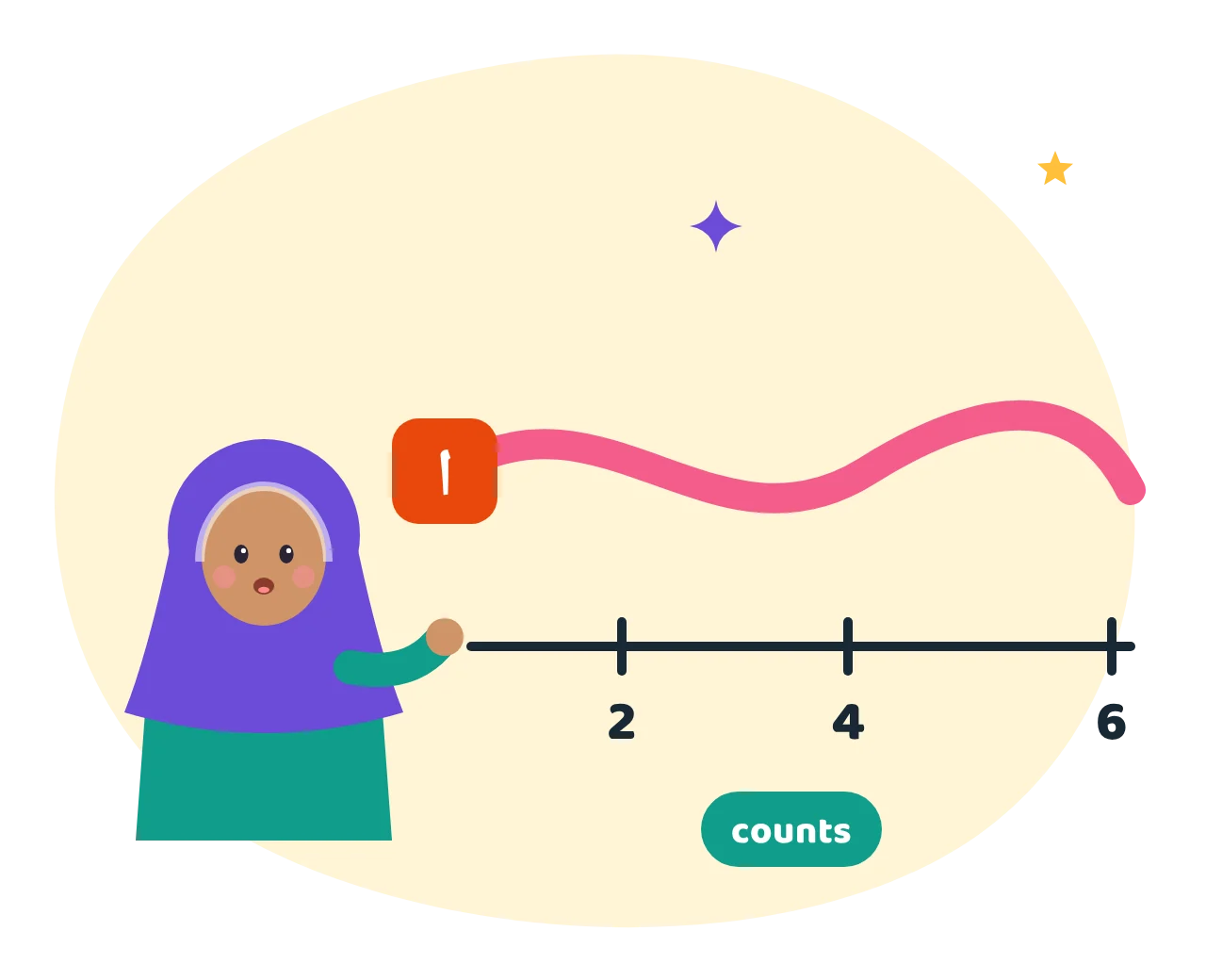
Madd (مدّ) means “to stretch”. In Tajweed it is lengthening the sound of a vowel letter. The length is measured in counts (harakat), where one count is the time of a short vowel.
One alif equals two counts (Faizan-e-Tajweed, p. 30). There are three madd letters:
| Example | Where | What happens |
|---|---|---|
| قَالَ | Al-Baqarah 2:30 | Alif after fatha: “qaa-la” |
| يَقُولُ | Al-Baqarah 2:8 | Waaw after damma: “ya-qoo-lu” |
| قِيلَ | Al-Baqarah 2:11 | Yaa after kasra: “qee-la” |
Types of madd and how long to stretch
Every madd starts as a natural madd of two counts. What comes after the madd letter (a hamzah, a sukoon or a stop) decides whether it gets longer.
| Type | When | Counts | Example |
|---|---|---|---|
| Natural madd (tabee‘i) | A madd letter with no hamzah or sukoon after it | 2 | قَالَ Al-Baqarah 2:30 |
| Connected madd (muttasil) | Madd letter, then hamzah in the same word | 5 | جَاءَ An-Nasr 110:1 |
| Separated madd (munfasil) | Madd letter at the end of a word, hamzah at the start of the next | 5 | إِنَّا أَعْطَيْنَاكَ Al-Kawthar 108:1 |
| Necessary madd (lazim) | Madd letter, then a permanent sukoon or shaddah | 6 | الضَّالِّينَ Al-Fatihah 1:7 |
| Madd for stopping (‘arid lis-sukoon) | Madd letter, then a letter you stop on | 6, 4 or 2 (6 preferred) | الْعَالَمِينَ Al-Fatihah 1:2 |
| Madd leen | Waw or yaa sakin after a fatha, when you stop | 2, 4 or 6 (2 preferred) | خَوْفٍ Quraysh 106:4 |
| Madd badal | Hamzah, then a madd letter | 2 | آمَنُوا Al-Baqarah 2:9 |
| Madd ‘iwad | Stopping on a fathatayn tanween: read as alif | 2 | عَلِيمًا حَكِيمًا An-Nisa 4:11 |
These rules follow the recitation of Hafs from ‘Asim by way of Imam ash-Shatibi, the recitation printed in the Indo-Pak mushaf, as taught in Dawat-e-Islami’s Tajweed book Faizan-e-Tajweed.
Madd in the opening letters (الم)
Some surahs open with separate letters, such as الم (Al-Baqarah 2:1). Each letter is read by its name: alif, laam, meem. Letter names spelled with three letters and a madd in the middle, like laam and meem, are stretched for six counts. The alif has no madd.
How to count the lengths
Practise with Al-Fatihah
Al-Fatihah alone contains natural madd, madd for stopping and madd lazim. Add these short surahs for the others:
| Example | Where | Listen for |
|---|---|---|
| الْعَالَمِينَ | Al-Fatihah 1:2 | Madd for stopping: 2, 4 or 6 |
| إِيَّاكَ نَعْبُدُ | Al-Fatihah 1:5 | Natural madd: 2 counts |
| الضَّالِّينَ | Al-Fatihah 1:7 | Madd lazim: 6 counts |
| جَاءَ | An-Nasr 110:1 | Madd muttasil: 5 counts |
| إِنَّا أَنْزَلْنَاهُ | Al-Qadr 97:1 | Madd munfasil: 5 counts |
Common mistakes
- Stretching short vowels, which turns a fatha into an alif and can change the meaning.
- Cutting madd lazim short. الضالين needs the full six counts.
- Changing lengths from one ayah to the next.
- Over-stretching natural madd beyond two counts.
Frequently asked questions
What are the madd letters?
Three: alif after a fatha, waw sakin after a damma and yaa sakin after a kasra.
What is one count (harakah)?
The time it takes to say a short vowel. Many teachers measure it by folding or opening one finger at a steady pace.
How long are madd muttasil and munfasil?
In the recitation of Hafs by way of Imam ash-Shatibi they are read with tawassut: two and a half alif, that is five counts (Faizan-e-Tajweed, p. 30). Madd muttasil is also called madd wajib.
How long is madd lazim?
Always tul: three alif, that is six counts (Faizan-e-Tajweed, p. 30).
Why can some madds be 2, 4 or 6 counts?
In madd ‘arid lis-sukoon and madd leen the sukoon only appears because you stop, so 6, 4 or 2 counts are allowed. For madd ‘arid, six counts (tul) is preferred, then four, then two; for madd leen, two counts (qasr) is preferred (Faizan-e-Tajweed, p. 31).
Sources
- Tuhfat al-Atfal, Shaikh Sulayman al-Jamzuri, verses 35–57.
- al-Muqaddimah al-Jazariyyah, Imam Ibn al-Jazari, verses 69–72.
- Faizan-e-Tajweed, Dawat-e-Islami (Al-Madinah-tul-Ilmiyyah), p. 30, p. 31 (lengths for Hafs by way of Imam ash-Shatibi).
- Quran examples: the Tanzil Quran text (Hafs), each with its surah and verse.
Learn Tajweed with a teacher who listens to you
Reading about a rule is the first step. Hearing it corrected in your own recitation is what makes it stick. Try three free one-to-one classes.
More Tajweed rules
Last updated: October 2026