
Ghunnah in Tajweed: The Nasal Sound Explained
Ghunnah is the nasal sound of noon and meem. Learn where it comes from, when to hold it for two counts and how to check it, with examples from the Quran.
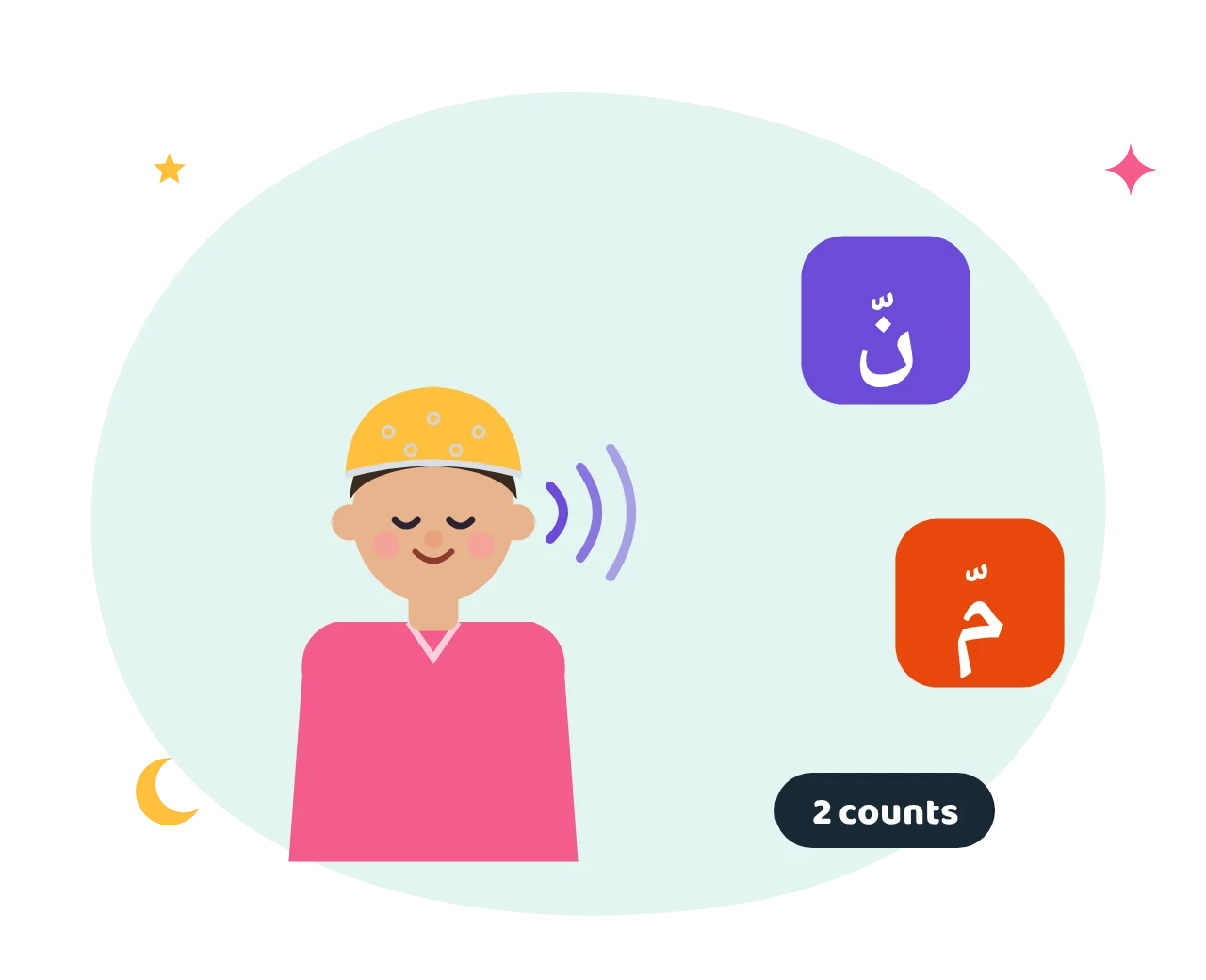
What is ghunnah?
Ghunnah (غنّة) is the nasal sound that comes out through the nose. It is a natural quality of the two letters ن and م: try saying either with your nose pinched and the sound stops.
Every noon and meem has some ghunnah, but in certain places it is held for one alif, that is two counts (Faizan-e-Tajweed, pp. 28 and 30). Those are the places to learn.
When is the ghunnah held for two counts?
| Situation | Example | Where |
|---|---|---|
| Noon with shaddah | إِنَّ | Al-Baqarah 2:6 |
| Meem with shaddah | عَمَّ | An-Naba' 78:1 |
| Noon with shaddah | النَّاسِ | An-Nas 114:1 |
| Idgham with ghunnah | مَنْ يَقُولُ | Al-Baqarah 2:8 |
| Iqlab | مِنْ بَعْدِ | Al-Baqarah 2:27 |
| Ikhfa | يُنْفِقُونَ | Al-Baqarah 2:3 |
| Ikhfa shafawi | تَرْمِيهِمْ بِحِجَارَةٍ | Al-Fil 105:4 |
| Idgham shafawi | كَمْ مِنْ | Al-Baqarah 2:249 |
Practise ghunnah
Short surahs are the easiest place to practise. Read these with a teacher or alongside a recitation you trust:
| Example | Where | Listen for |
|---|---|---|
| النَّاسِ | An-Nas 114:1 | Mushaddad noon, repeated through Surah An-Nas |
| إِنَّا | Al-Kawthar 108:1 | Mushaddad noon |
| إِنَّ | Surah 103 103:2 | Mushaddad noon |
| عَمَّ | An-Naba' 78:1 | Mushaddad meem |
Common mistakes
- Rushing the shaddah in إنّ, ثمّ and النّاس, with no two-count hold.
- Stretching it too long, much more than two counts.
- Ghunnah through the mouth instead of the nose.
- Adding ghunnah to other letters, like the ل or ر after an idgham without ghunnah.
Frequently asked questions
What is ghunnah?
A nasal sound that comes from the nose (al-khayshum). It belongs to the letters noon and meem.
Which letters have ghunnah?
Only noon (ن) and meem (م), including tanween, which is pronounced as a noon.
How long is the ghunnah?
One alif, that is two counts (Faizan-e-Tajweed, pp. 28 and 30): on noon and meem with shaddah, and in idgham with ghunnah, iqlab, ikhfa, ikhfa shafawi and idgham shafawi.
How can I check my ghunnah?
Gently pinch your nose while saying a mushaddad noon, like in إنّ. If the sound stops, the ghunnah is coming from the nose as it should.
Sources
- Tuhfat al-Atfal, Shaikh Sulayman al-Jamzuri, verses 10, 13 and 17.
- al-Muqaddimah al-Jazariyyah, Imam Ibn al-Jazari, verses 62–63 and 68.
- Faizan-e-Tajweed, Dawat-e-Islami (Al-Madinah-tul-Ilmiyyah), p. 28, p. 30 (one alif, that is two counts).
- Quran examples: the Tanzil Quran text (Hafs), each with its surah and verse.
Learn Tajweed with a teacher who listens to you
Reading about a rule is the first step. Hearing it corrected in your own recitation is what makes it stick. Try three free one-to-one classes.
More Tajweed rules
Last updated: October 2026