
Waqf Signs in the Quran: Stopping Rules Explained
What do the small signs above the Quran mean? A clear chart of the waqf signs printed in the Indo-Pak mushaf, as taught in Faizan-e-Tajweed, the four places of saktah and how to stop.
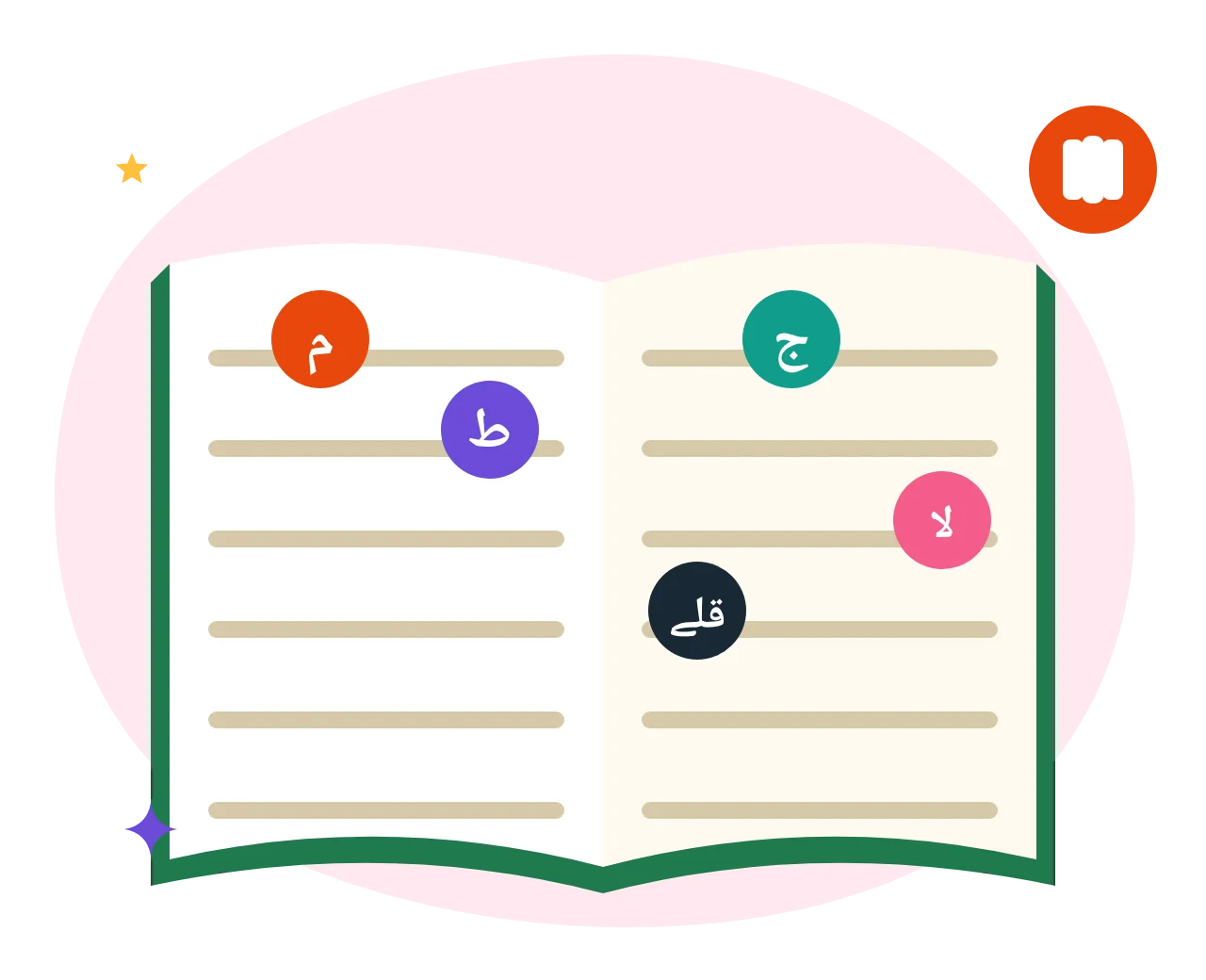
What are waqf signs?
Waqf (وقف) means stopping. Small signs printed above the lines of the Quran tell you where you must stop, where you may stop and where you should carry on, so that the meaning of the verse is never broken.
The waqf signs and what they mean
| Sign | Name | What to do |
|---|---|---|
| | End of an ayah | The ayah is complete here |
| م | Waqf lazim | You must stop here; otherwise there is a strong risk of changing the meaning |
| ط | Waqf mutlaq | You should stop here |
| ج | Waqf ja’iz | Stopping and continuing are both allowed |
| ز | Waqf mujawwaz | Stopping here is permitted |
| ص | Waqf murakhkhas | Stopping is permitted when needed, for example to take a breath |
| صلے | Al-waslu awla | Continuing is better |
| قلا | Qeela la waqfa ‘alaih | There is a difference of opinion; some said do not stop here |
| ق | Qeela ‘alaihil-waqf | Some said stop here; stopping is not wrong, but it is a weak stop |
| قف | Qad yuqaf | One may sometimes stop here (it is not a command to stop) |
| صل | Qad yusal | One may sometimes join here (not a command) |
| لا | La waqfa ‘alaih | Inside an ayah: do not stop; join with what follows. Above the end-of-ayah circle: stopping is allowed, because the ayah ends there |
| ك | Kadhalik | Follow the sign before it |
| ∴ ∴ | Mu‘anaqah | Stop at only one of the two places, not both and not neither |
Meanings as taught in Faizan-e-Tajweed (Dawat-e-Islami), lesson 26, p. 39, for the signs printed in the Indo-Pak mushaf.
The four places of saktah in Hafs
In the recitation of Hafs there is a short pause without breath in these four places. Many mushafs mark them with a small س or the word سكتة.
| Words | Where |
|---|---|
| عِوَجًا ۜ قَيِّمًا | Al-Kahf 18:1–2 |
| مَرْقَدِنَا ۜ ۗ هَٰذَا | Ya-Sin 36:52 |
| مَنْ ۜ رَاقٍ | Al-Qiyamah 75:27 |
| بَلْ ۜ رَانَ | Al-Mutaffifin 83:14 |
An example of mu‘anaqah
In Al-Baqarah 2:2 the three dots appear twice: لَا رَيْبَ ۛ فِيهِ. You may stop after la rayb or after fih, but not at both. Either way the meaning is complete.
How to stop on a word
Starting again after a stop (ibtida)
After stopping, start again from a place where the meaning makes sense, usually the word you stopped on or a few words before it. Never start from a word that would give a wrong meaning on its own.
Frequently asked questions
What does waqf mean?
Waqf means stopping: pausing at the end of a word and taking a breath before carrying on.
Can I stop where the sign is لا?
Inside an ayah, no: join it with what follows. If the لا is above the end-of-ayah circle, stopping is allowed because the ayah ends there (Faizan-e-Tajweed, p. 39).
What is saktah?
A short pause without taking a breath. In the recitation of Hafs it is read in four places in the Quran, shown below.
How should I stop on the last letter?
Usually with a sukoon. A tanween with fathatayn is read as a long alif (عَلِيمًا is read “‘aleemaa”), and a taa marbutah is read as a soft haa.
Sources
- Faizan-e-Tajweed, Dawat-e-Islami (Al-Madinah-tul-Ilmiyyah), p. 39 (lesson 26, the signs of waqf).
- Quran examples: the Tanzil Quran text (Hafs), each with its surah and verse.
Learn Tajweed with a teacher who listens to you
Reading about a rule is the first step. Hearing it corrected in your own recitation is what makes it stick. Try three free one-to-one classes.
More Tajweed rules
Last updated: October 2026