
Noorani Qaida Page 19 - Lesson 10 Conclusion & Lesson 11: Mashq Sukoon
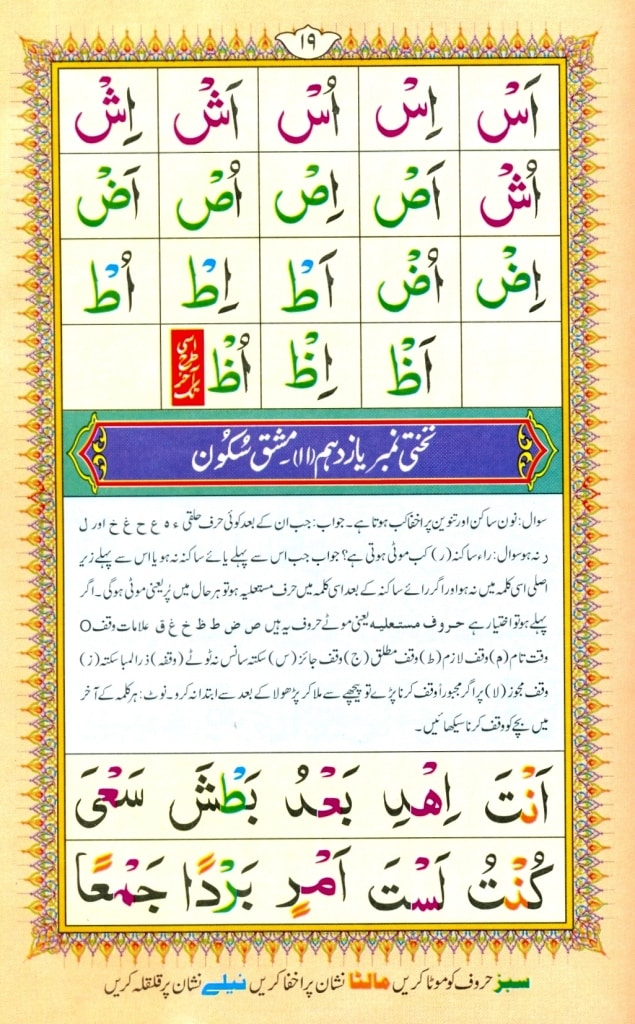
Welcome to Noorani Qaida Page 19 at Learning Quraan. This page completes the basic letter combinations with Sukoon (Jazm) from Lesson 10 and formally introduces Takhti Number 11 (تختی نمبر یاز دہم: مشقِ سکون) — practical compound word exercises applying Sukoon across complete words.
Page 19 is a major milestone in Tajweed, introducing important rules regarding Huroof-e-Musta’liyah (Heavy Letters), Qalqalah, Rules of Ra Saakin, and Punctuation/Stop Marks (Waqf). Master these foundational rules with an experienced tutor through our Online Noorani Qaida for Kids or explore our comprehensive curriculum on the Courses page.
What is Covered in Noorani Qaida Page 19?
Page 19 is structured into three key sections:
- 1. Final Single-Letter Sukoon Exercises (Lesson 10):
- Seen (س) & Sheen (ش): أَسْ (As), إِسْ (Is), أُسْ (Us) | أَشْ (Ash), إِشْ (Ish), أُشْ (Ush)
- Sad (ص) & Dad (ض): أَصْ (As), إِصْ (Is), أُصْ (Us) | أَضْ (Adh), إِضْ (Idh), أُضْ (Udh)
- To’a (ط) & Zha (ظ): أَطْ (At), إِطْ (It), أُطْ (Ut) | أَظْ (Azh), إِظْ (Izh), أُظْ (Uzh)
- 2. Key Tajweed Rules & Q&A (Urdu Section):
- Huroof-e-Musta’liyah (خ, ص, ض, ط, ظ, غ, ق): Seven letters that are always pronounced with a full, heavy mouth position (Tafkheem).
- Ra Saakin (رْ): Pronounced heavy when preceded by Fatha or Damma; pronounced light when preceded by Kasra.
- Punctuation Marks (Waqf Signs): Guidelines on stop symbols such as Waqf-e-Laazim (م), Waqf-e-Mutlaq (ط), Waqf-e-Ja’iz (ج), and Laa (لا).
- 3. Lesson 11 – Mashq Sukoon Word Exercises:
- Anta (أَنْتَ): Practice Hamza with Fatha, Noon Saakin (Ikhfa), and Ta with Fatha.
- Ihdi (إِهْدِ): Practice Hamza with Kasra, Ha Saakin, and Dal with Kasra.
- Ba’du (بَعْدُ): Practice Ba with Fatha, ‘Ayn Saakin, and Dal with Damma.
- Batsha (بَطْشَ): Practice Ba with Fatha, To’a Saakin (Qalqalah), and Sheen with Fatha.
- Sa’aa (سَعَى): Practice Seen with Fatha, ‘Ayn with Fatha, and Alif Maqsoorah.
- Kunta (كُنْتَ): Practice Kaf with Damma, Noon Saakin, and Ta with Fatha.
- Lasta (لَسْتَ): Practice Lam with Fatha, Seen Saakin, and Ta with Fatha.
- Amrun (أَمْرٌ): Practice Hamza with Fatha, Meem Saakin, and Ra with Dammatain.
- Bardan (بَرْدًا): Practice Ba with Fatha, Ra Saakin (Heavy), and Dal with Fathatain.
- Jam’an (جَمْعًا): Practice Jeem with Fatha, Meem Saakin, and ‘Ayn with Fathatain.
Key Tajweed Guidelines for Page 19
To recite Page 19 correctly, apply the following fundamental Tajweed rules:
- Qalqalah on Heavy Letters: Notice To’a (ط) in words like Batsha (بَطْشَ). It requires a distinct bouncing echo when carrying a Sukoon.
- Heavy vs. Light Ra (ر): In Bardan (بَرْدًا), the Ra Saakin is preceded by a Fatha, so it must be pronounced with a full, heavy voice.
- Soft Sibilant Letters: Distinguish between the whistle of Seen (س), the heavy echo of Sad (ص), and the deep lateral pronunciation of Dad (ض).
Complete Page-by-Page Lesson Directory
Navigate easily to any lesson in our complete online Noorani Qaida guide:
Page 03
Page 04
Page 05
Page 06
Page 07
Page 08
Page 09
Page 10
Page 11
Page 12
Page 13
Page 14
Page 15
Page 16
Page 17
Page 18
Page 19
Page 20
Page 21
Page 22
Page 23
Page 24
Page 25
Page 26
Page 27
Page 28
Page 29
Page 30
Page 31
Page 32
Free Interactive Islamic Tools
Explore our practical online web applications on the Islamic Tools page:
- Count daily Azkar effortlessly using our Digital Tasbih Counter.
- Find the exact direction of the Kaaba with the Qibla Finder.
- Convert Gregorian and Islamic dates seamlessly with the Hijri Date Converter.
- Browse authentic Muslim names on the Islamic Names Finder.
- Calculate Islamic obligations easily using the Zakat Calculator and Islamic Inheritance Calculator.
Start Learning with Qualified Quran Tutors
Learn more about our qualified teachers on the About Us page, check pricing details on our Fee page, or get in touch via the Contact Us page to book your free live trial lesson.