
Noorani Qaida Page 20 - Lesson 11 Continued: Mashq Sukoon
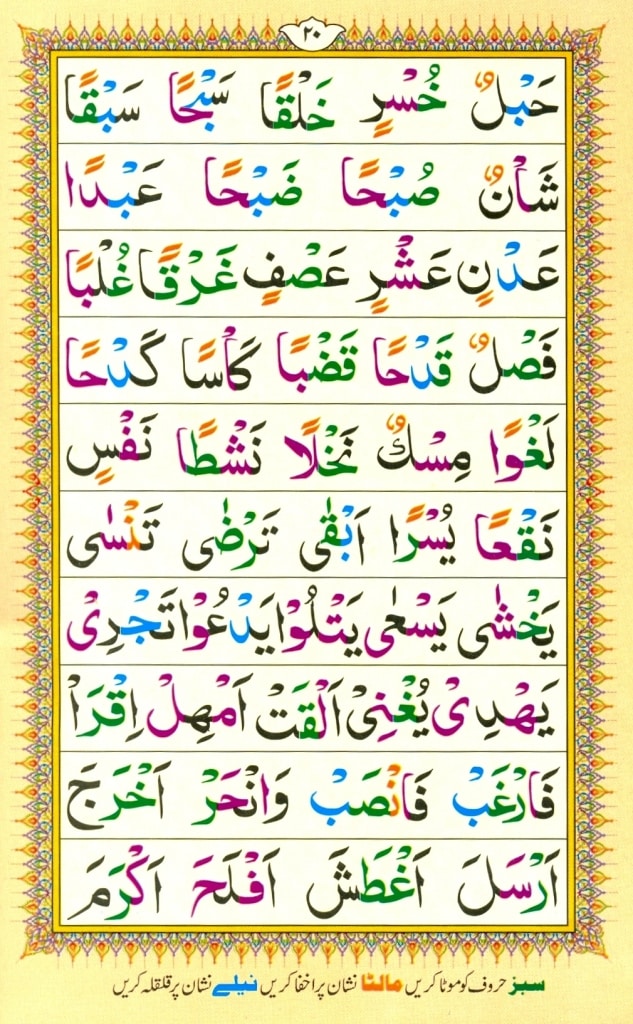
Welcome to Noorani Qaida Page 20 at Learning Quraan[cite: 15]. This page expands on Takhti Number 11 (تختی نمبر یاز دہم: مشقِ سکون), transitioning students from basic two-letter combinations into complete 3-letter and 4-letter compound words containing Sukoon (Jazm)[cite: 15].
Mastering Page 20 is essential for building fluency in Quranic reading, as it integrates core Tajweed rules like Qalqalah (Echoing sound), Huroof-e-Musta’liyah (Heavy Letters), and Ikhfa (Nasal Hidden sound) into full words[cite: 15]. Practice these rules live with a certified Quran teacher through our Online Noorani Qaida for Kids course or browse all available programs on our Courses page.
Word Breakdown & Breakdown on Page 20
Page 20 features structured word grids that train students to read complex letter joinings correctly[cite: 15]:
- 3-Letter Nouns with Tanween & Sukoon:
- حَبْلٌ (Hablun): Ha with Fatha, Ba Saakin (Qalqalah), Lam with Dammatain[cite: 15].
- خُسْرٍ (Khusrin): Khaa with Damma (Heavy), Seen Saakin, Ra with Kasratain[cite: 15].
- خَلْقًا (Khalqan): Khaa with Fatha (Heavy), Lam Saakin, Qaaf with Fathatain[cite: 15].
- سَبْحًا (Sabhan) & سَبْقًا (Sabqan): Practice with Qalqalah on Ba Saakin and Qaaf Saakin[cite: 15].
- شَأْنًا (Sha’nan): Hamza Saakin with a crisp stop, followed by Noon with Fathatain[cite: 15].
- صُبْحًا (Subhan) & ضَبْحًا (Dhabhan): Heavy sibilant letters (Sad and Dhad) combined with Qalqalah on Ba Saakin[cite: 15].
- عَبْدًا (Abdan): Ayn with Fatha, Ba Saakin (Qalqalah), Dal with Fathatain[cite: 15].
- Words with Soft Vowels & Extended Standing Harakat:
- تَنْسٰى (Tansa): Noon Saakin with Ikhfa, followed by Seen with Khari Zabar (Alif Maqsoorah)[cite: 15].
- تَرْضٰى (Tardha): Ra Saakin (Heavy) preceded by Fatha, ending with Dhad and Khari Zabar[cite: 15].
- يَخْشٰى (Yakhsha) & يَسْعٰى (Yas’a): Smooth transition from Khaa Saakin / ‘Ayn Saakin to standing Fatha[cite: 15].
- يَدْعُوا (Yad’oo) & يَتْلُوا (Yatloo): Joining Sukoon with Madd letters (Waw Maddah)[cite: 15].
- 4-Letter Action Verbs (Bottom Grid):
- إِقْرَأْ (Iqra’): Hamza with Kasra, Qaaf Saakin (Qalqalah), Ra with Fatha (Heavy), Hamza Saakin[cite: 15].
- فَارْغَبْ (Fa’rghab): Command verb featuring heavy Ra Saakin and Qalqalah on Ba Saakin[cite: 15].
- فَانْصَبْ (Fansab): Practice Noon Saakin with Ikhfa before the heavy letter Sad, ending in Qalqalah[cite: 15].
- وَانْحَرْ (Wanhar): Izhar on Noon Saakin before Ha, ending in heavy Ra Saakin[cite: 15].
- أَخْرَجَ (Akhraja), أَرْسَلَ (Arsala), أَعْطَشَ (A’tasha), أَفْلَحَ (Aflaha), أَكْرَمَ (Akrama): Multi-syllable verbs combining Sukoon with quick vowel sounds[cite: 15].
Color-Coded Tajweed Guide for Page 20
The standard color key at the bottom of Page 20 guides correct pronunciation[cite: 15]:
- Green Letters (Huroof-e-Musta’liyah): Pronounce with a full, heavy mouth position (e.g., خ, ص, ض, ط, ظ, غ, ق)[cite: 15].
- Orange/Yellow Highlights (Ikhfa): Light nasal sound when Noon Saakin or Tanween is followed by Ikhfa letters[cite: 15].
- Blue Highlights (Qalqalah): Rebound/echo sound on the five Qalqalah letters (ق, ط, ب, ج, د) when they carry a Sukoon[cite: 15].
Complete Page-by-Page Lesson Directory
Navigate directly to any page in our full online Noorani Qaida guide:
Page 03
Page 04
Page 05
Page 06
Page 07
Page 08
Page 09
Page 10
Page 11
Page 12
Page 13
Page 14
Page 15
Page 16
Page 17
Page 18
Page 19
Page 20
Page 21
Page 22
Page 23
Page 24
Page 25
Page 26
Page 27
Page 28
Page 29
Page 30
Page 31
Page 32
Explore Free Islamic Tools
Enhance your daily worship with interactive web tools on our Islamic Tools page:
- Keep track of daily Zikr with the Digital Tasbih Counter.
- Locate the precise direction of prayer using the Qibla Finder.
- Convert Islamic dates with the Hijri Date Converter.
- Find meaningful names using the Islamic Names Finder.
- Calculate Islamic dues with our Zakat Calculator and Islamic Inheritance Calculator.
Ready to Practice with a Qualified Quran Teacher?
Learn more about our teaching team on the About Us page, review pricing on our Fee page, or contact us via the Contact Us page to claim a free 3-day trial class.