
Madni Qaida in English Page 06 – Diagram of the Articulators of the Letters
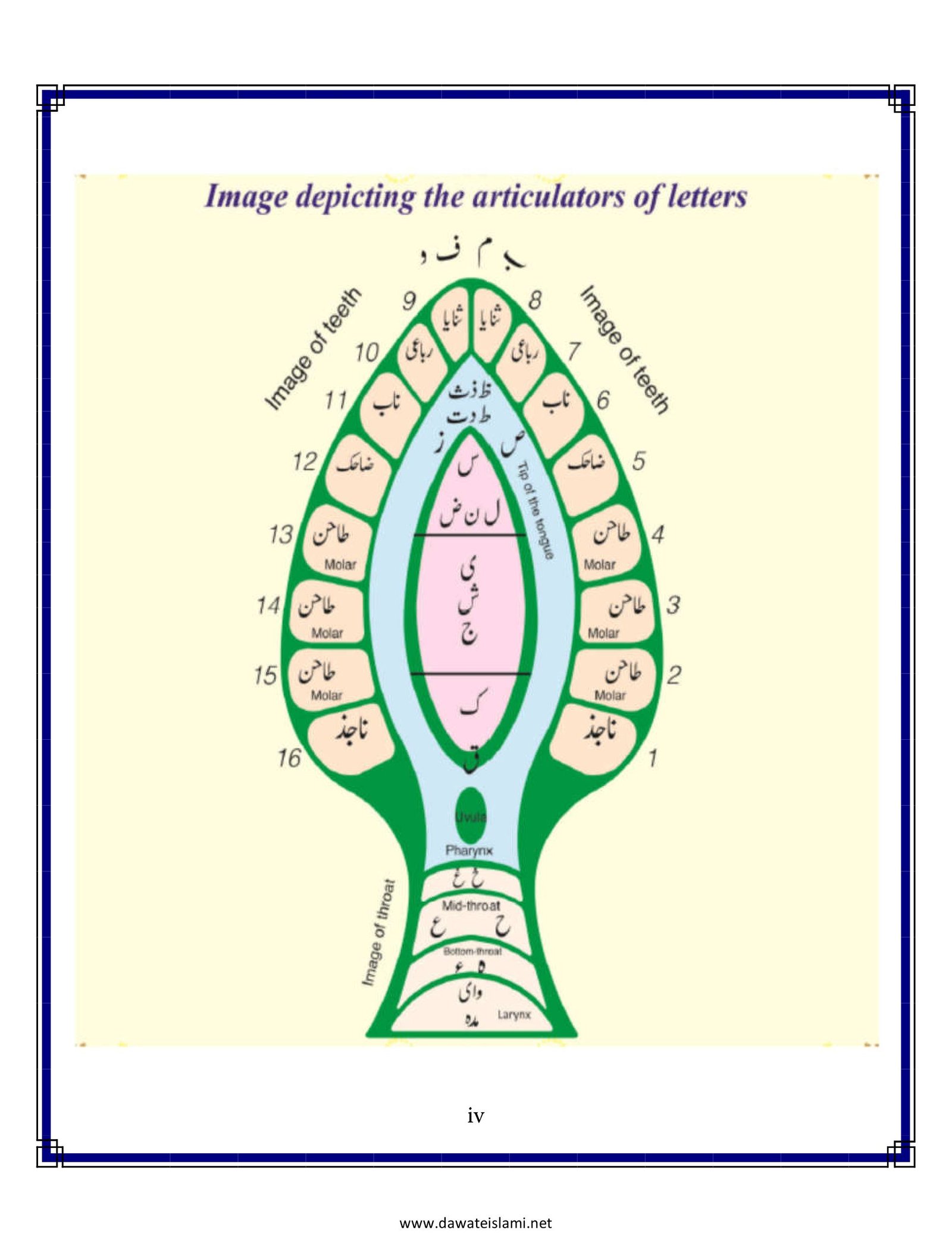
Welcome to Madni Qaida in English Page 06 at Learning Quraan. Page 6 is a labelled diagram of the mouth and throat showing where each letter comes from. It numbers the 16 teeth and marks the tip of the tongue, the uvula, the pharynx and the three parts of the throat.
This page is part of the opening pages of the book. See every page on the Madni Qaida in English index, or learn with a teacher in our online Quran courses.
What is on Madni Qaida in English Page 06?
- The names of the teeth used in Tajweed, such as Thanaya, Ruba’iyat, Anyab, Dawahik, Tawahin and Nawajidh.
- Which letters come from the tongue, the palate, the teeth and the lips.
- The throat divided into top, middle and bottom, and the letters that come from each part.
How to Practise This Page
- Read the opening pages once with your child before starting Lesson 1, so they know what the book is for.
- Keep the Makharij chart and the articulation diagram nearby: you will come back to them in almost every lesson.
- Recite the du’a for study and Salat upon the Prophet ﷺ before each class to build a good routine.
How to Read the Drawing
This page is a picture of the mouth seen from above, with the throat at the bottom and the lips at the top. It shows the same places as the chart on page 2:
- The throat (bottom of the drawing) has three parts, labelled from the deepest upwards: ء ه, then ع ح, then غ خ.
- The tongue (the long shape in the middle) is marked from back to front: ق and ك at the back, ج ش ی in the middle, ض along the sides, and ل ن ر, ط د ت, ظ ذ ث and ص ز س towards the tip.
- The lips (top of the drawing) carry ب م و and ف.
- The nose is marked for Ghunnah.
The Names of the Teeth
The numbered boxes around the edge are the teeth, 16 on each jaw, and their Arabic names are written inside. Tajweed books use these names to describe exactly where some letters are made:
| Name | Arabic | Which teeth | Letters made against them |
|---|---|---|---|
| Thanaya | ثنایا | the 4 front teeth (2 upper, 2 lower) | ث ذ ظ, ط د ت, ف |
| Ruba‘iyat | رباعیات | the 4 teeth beside them | ل |
| Anyab | انیاب | the 4 canines | ل |
| Dawahik | ضواحک | the first molar on each side, 4 in all | ض |
| Tawahin | طواحن | the grinding molars, 12 in all | ض |
| Nawajidh | نواجذ | the wisdom teeth, 4 in all | ض |
So “the tip of the tongue with the edges of the upper Thanaya” is the place of ث ذ ظ, and “the side of the tongue with the upper molars” is the place of ض.
Using the Drawing With a Child
- Point to a place and ask the child to say a letter from it.
- Use a mirror for the lip letters: بَ مَ فَ وَ.
- Come back to this page whenever two letters sound alike, as in Lesson 4.
Source: the page shown above is from the Madani Qa‘idah (English edition), front matter, book page iv, published by Maktaba-tul-Madinah (Dawat-e-Islami). The names of the teeth and places of the letters follow Faizan-e-Tajweed (Dawat-e-Islami), pp. 16–17, and al-Muqaddimah al-Jazariyyah. Notes written by Learning Quraan.
Madni Qaida in English: Page Directory
Jump to any page of the English edition, or go back to the full page index.
Explore Our Free Islamic Tools
Enhance your daily Islamic practices with our online interactive Islamic Tools:- Count daily recitations on our Digital Tasbih Counter.
- Find the Qibla direction with our Qibla Finder.
- Convert dates with the Hijri Date Converter.
- Search meaningful names with our Islamic Names Finder.
- Calculate obligations with the Zakat Calculator and Islamic Inheritance Calculator.
Get One-on-One Tutoring Support
Learn more about our qualified Quran teachers on our About Us page, review pricing on our Fee structure page, or visit our Contact Us page to book a free trial class.
← Previous: Page 05👉 Proceed to Page 07 – Translator’s Note
Page images: Madani Qa’idah, published by Maktaba-tul-Madinah (Dawat-e-Islami), shown here as a study reference.
