
Madni Qaida in English Page 37 – Lesson 12: Tanween Phrases Practice
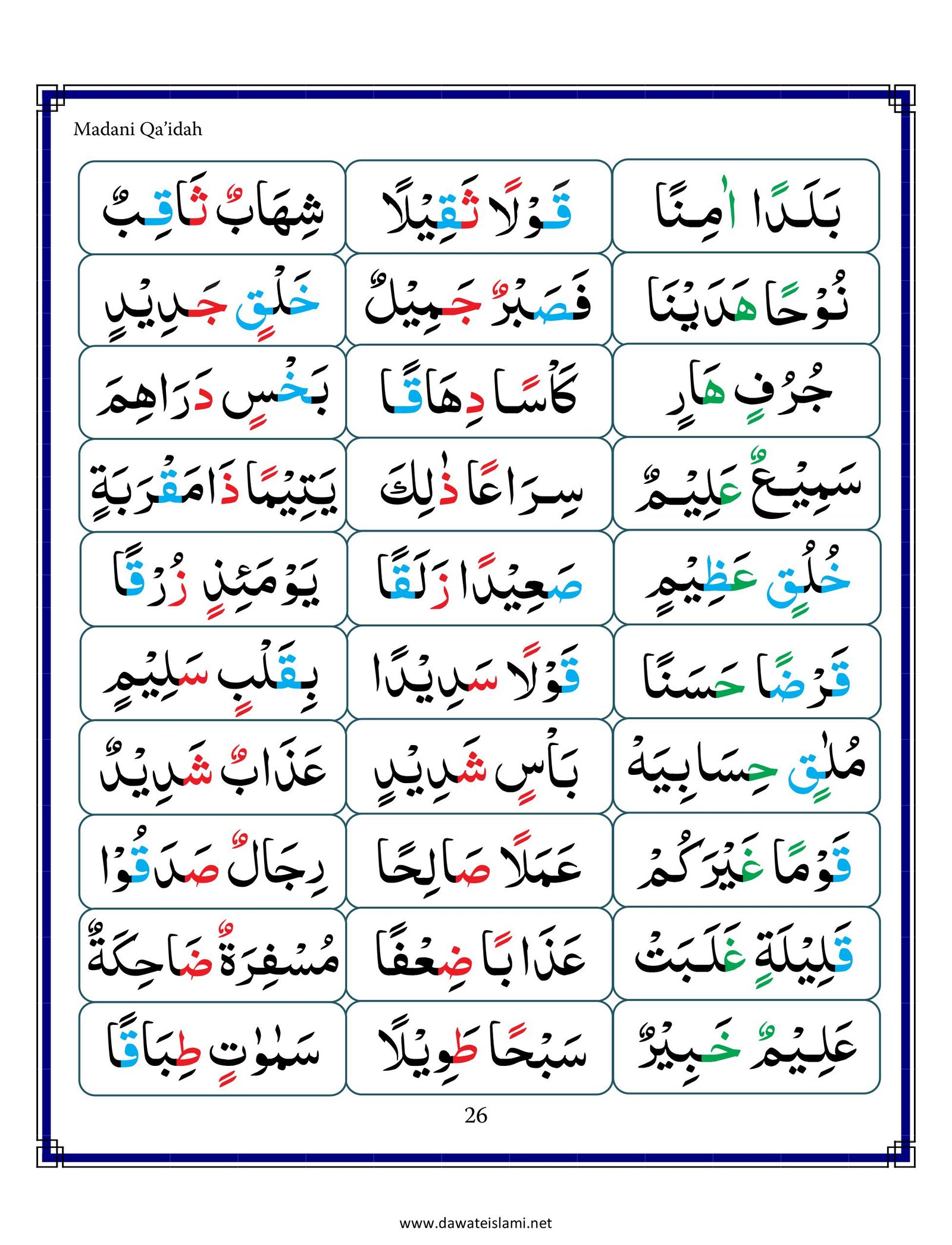
Welcome to Madni Qaida in English Page 37 at Learning Quraan. This page is a phrase drill with Tanween followed by the next word, testing Ikhfa and Izhar across word boundaries.
This page is part of Lesson 12: Noon Saakinah and Tanween (Izhar and Ikhfa). See every page on the Madni Qaida in English index, or learn with a teacher in our online Quran courses.
What is on Madni Qaida in English Page 37?
- Phrases such as بلدًا آمنًا and قولًا ثقيلًا.
- Phrases such as سميعٌ عليمٌ and خلقٍ عظيمٍ.
- Phrases with heavy letters after Tanween, such as عذابًا ضعفًا.
How to Practise This Page
- Before a throat letter (ء ه ع ح غ خ), say the Noon clearly with no Ghunnah: Izhar.
- Before any of the 15 Ikhfa letters, hide the Noon with a Ghunnah of about one Alif.
- Mark the letter after each Noon Saakin or Tanween before you read the word.
Tanween Before Izhar and Ikhfa Letters
Page 37 practises the Lesson 12 rules on Tanween. Every box is a pair of Quranic words: the first ends in Tanween (a hidden Noon Saakinah), and the second begins with the letter that decides the rule. The page is built in a pattern: in each row the right-hand box is Izhar (green), and the other two are Ikhfa (red), working through the Ikhfa letters in alphabetical order.
| Pair | Rule | Where it occurs |
|---|---|---|
| بَلَدًا اٰمِنًا | Izhar | Surah al-Baqarah 2:126 |
| قَوْلًا ثَقِيْلًا | Ikhfa | Surah al-Muzzammil 73:5 |
| شِهَابٌ ثَاقِبٌ | Ikhfa | Surah as-Saffat 37:10 |
| نُوْحًا هَدَيْنَا | Izhar | Surah al-An‘am 6:84 |
| فَصَبْرٌ جَمِيْلٌ | Ikhfa | Surah Yusuf 12:18 |
| خَلْقٍ جَدِيْدٍ | Ikhfa | Surah Qaf 50:15 |
| جُرُفٍ هَارٍ | Izhar | Surah at-Tawbah 9:109 |
| كَاْسًا دِهَاقًا | Ikhfa | Surah an-Naba 78:34 |
| بَخْسٍ دَرَاهِمَ | Ikhfa | Surah Yusuf 12:20 |
| سَمِيْعٌ عَلِيْمٌ | Izhar | Surah al-Baqarah 2:181 |
| سِرَاعًا ذٰلِكَ | Ikhfa | Surah Qaf 50:44 |
| يَتِيْمًا ذَا مَقْرَبَةٍ | Ikhfa | Surah al-Balad 90:15 |
| خُلُقٍ عَظِيْمٍ | Izhar | Surah al-Qalam 68:4 |
| صَعِيْدًا زَلَقًا | Ikhfa | Surah al-Kahf 18:40 |
| يَوْمَئِذٍ زُرْقًا | Ikhfa | Surah Ta-Ha 20:102 |
| قَرْضًا حَسَنًا | Izhar | Surah al-Baqarah 2:245 |
| قَوْلًا سَدِيْدًا | Ikhfa | Surah al-Ahzab 33:70 |
| بِقَلْبٍ سَلِيْمٍ | Ikhfa | Surah ash-Shu‘ara 26:89 |
| مُلٰقٍ حِسَابِيَهْ | Izhar | Surah al-Haqqah 69:20 |
| بَاْسٍ شَدِيْدٍ | Ikhfa | Surah al-Fath 48:16 |
| عَذَابٌ شَدِيْدٌ | Ikhfa | Surah Al ‘Imran 3:4 |
| قَوْمًا غَيْرَكُمْ | Izhar | Surah at-Tawbah 9:39 |
| عَمَلًا صَالِحًا | Ikhfa | Surah al-Kahf 18:110 |
| رِجَالٌ صَدَقُوْا | Ikhfa | Surah al-Ahzab 33:23 |
| قَلِيْلَةٍ غَلَبَتْ | Izhar | Surah al-Baqarah 2:249 |
| عَذَابًا ضِعْفًا | Ikhfa | Surah al-A‘raf 7:38 |
| مُسْفِرَةٌ ضَاحِكَةٌ | Ikhfa | Surah ‘Abasa 80:38–39 |
| عَلِيْمٌ خَبِيْرٌ | Izhar | Surah al-Hujurat 49:13 |
| سَبْحًا طَوِيْلًا | Ikhfa | Surah al-Muzzammil 73:7 |
| سَمٰوٰتٍ طِبَاقًا | Ikhfa | Surah al-Mulk 67:3 |
Some pairs run across the end of one verse into the next (for example Surah ‘Abasa 80:38–39). Here they are practised as one joined reading, as the page sets them.
How to Hear the Difference
- Izhar after Tanween: the “n” of the Tanween is clear and short, then the throat letter: سَمِيْعٌ عَلِيْمٌ “samee‘un ‘aleem”.
- Ikhfa after Tanween: the “n” melts into a nasal sound that slides into the next letter: قَوْلًا سَدِيْدًا.
- Heavy letters after Tanween (ص ض ط ظ ق) colour the Ghunnah with a fuller sound: عَمَلًا صَالِحًا, سَبْحًا طَوِيْلًا.
Mistakes to Watch For
- Stopping between the two words. The rule only works when they are read together.
- Reading the Alif after Fathatayn. قَوْلًا joined to the next word is “qawlan”, not “qawlaa”.
- Ghunnah before a throat letter. نُوْحًا هَدَيْنَا keeps a clear “n”.
A Five-Minute Practice Plan
- Minute 1: read only the right-hand (Izhar) column, top to bottom.
- Minute 2: read the Ikhfa pairs of rows 1 to 5.
- Minute 3: read the Ikhfa pairs of rows 6 to 10.
- Minute 4: read three pairs and say which rule each one uses.
- Minute 5: read the Check Yourself line below.
Check Yourself
شِهَابٌ ثَاقِبٌ · فَصَبْرٌ جَمِيْلٌ · جُرُفٍ هَارٍ · خُلُقٍ عَظِيْمٍ · بِقَلْبٍ سَلِيْمٍ · سَمٰوٰتٍ طِبَاقًا
Source: the page shown above is from the Madani Qa‘idah (English edition), Lesson 12, book page 26, published by Maktaba-tul-Madinah (Dawat-e-Islami). Quran references are given as surah and verse. Lesson notes written by Learning Quraan.
Madni Qaida in English: Page Directory
Jump to any page of the English edition, or go back to the full page index.
Explore Our Free Islamic Tools
Enhance your daily Islamic practices with our online interactive Islamic Tools:- Count daily recitations on our Digital Tasbih Counter.
- Find the Qibla direction with our Qibla Finder.
- Convert dates with the Hijri Date Converter.
- Search meaningful names with our Islamic Names Finder.
- Calculate obligations with the Zakat Calculator and Islamic Inheritance Calculator.
Get One-on-One Tutoring Support
Learn more about our qualified Quran teachers on our About Us page, review pricing on our Fee structure page, or visit our Contact Us page to book a free trial class.
← Previous: Page 36👉 Proceed to Page 38 – Lesson 13: Tashdeed
Page images: Madani Qa’idah, published by Maktaba-tul-Madinah (Dawat-e-Islami), shown here as a study reference.
