
Madni Qaida in English Page 12 – Lesson 1: Huroof Mufridat (Individual Letters)
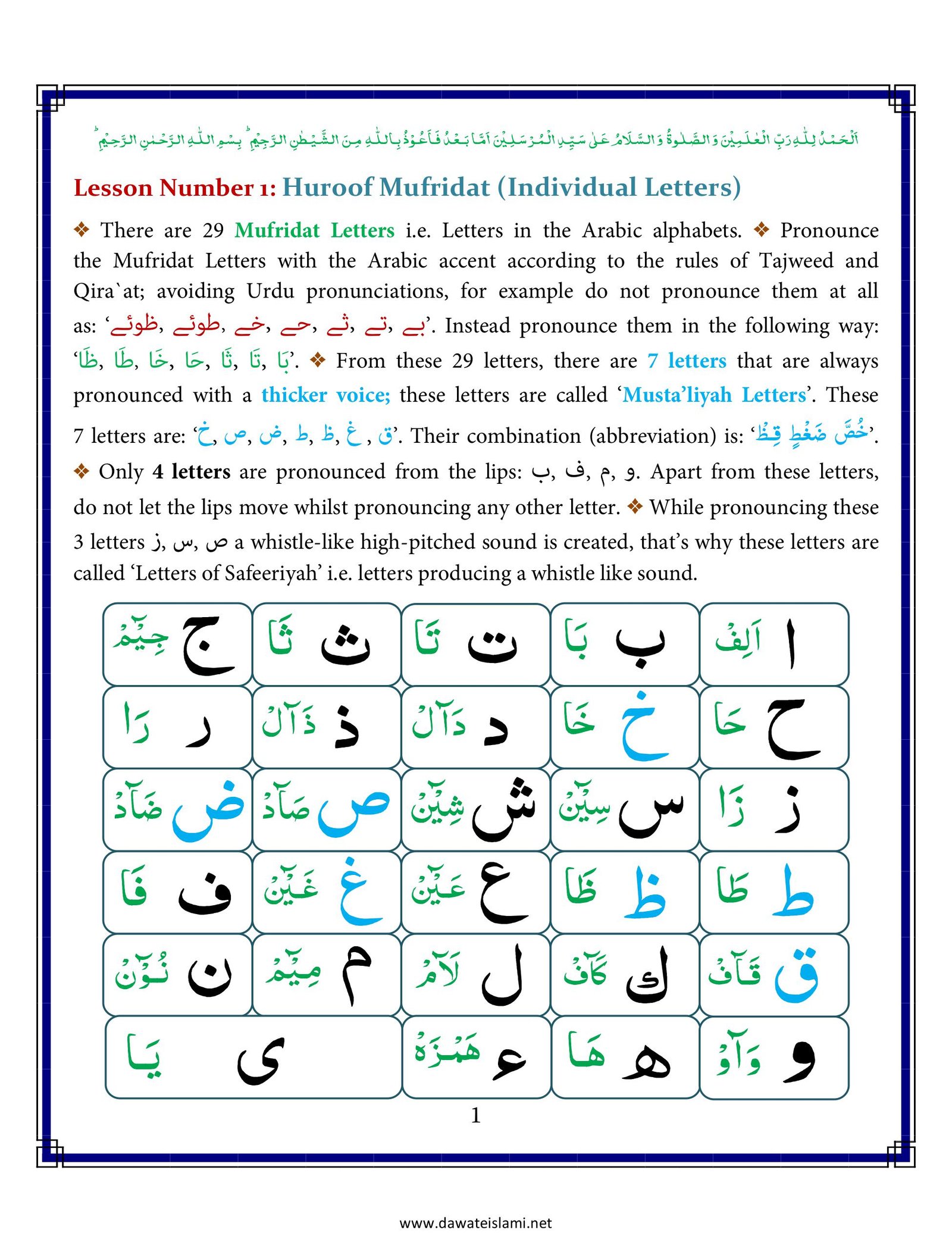
Welcome to Madni Qaida in English Page 12 at Learning Quraan. Lesson 1 introduces the 29 individual letters of the Arabic alphabet and the right way to name them in an Arabic accent. It also names the letter groups a beginner needs from day one.
This page is part of Lesson 1: Huroof Mufridat (Individual Letters). See every page on the Madni Qaida in English index, or learn with a teacher in our online Quran courses.
What is on Madni Qaida in English Page 12?
- All 29 Mufridat letters from Alif to Ya in a clear chart.
- The 7 Musta’liyah (heavy) letters and their memory phrase khuss daghtin qiz.
- The 4 lip letters ب ف م و, and the 3 whistling Safeeriyah letters ز س ص.
How to Practise This Page
- Hear every letter and test yourself on our free Arabic Alphabet with Sound tool.
- Say each letter by its Arabic name (baa, taa, thaa), not the Urdu-style bay, tay, say.
- Keep the seven heavy letters (khuss daghtin qiz) full-mouthed every single time.
- Check the lips in a mirror: only ب ف م و should use them.
All 29 Letters and Their Names
Lesson 1 sets out all 29 single letters (Huroof-e-Mufradat) in a chart, each with its Arabic name beside it in green. Learning the name and the letter together is how the Qaida builds the alphabet. The table follows the chart from right to left, row by row, and notes the letters that belong to a group taught on this page.
| Letter | Name on the page | Say the name | Group or place |
|---|---|---|---|
| ا | اَلِفْ | alif | |
| ب | بَا | baa | lips |
| ت | تَا | taa | |
| ث | ثَا | thaa | tongue tip with upper front teeth |
| ج | جِيْمْ | jeem | |
| ح | حَا | ḥaa | middle of the throat |
| خ | خَا | khaa | heavy |
| د | دَالْ | daal | |
| ذ | ذَالْ | dhaal | tongue tip with upper front teeth |
| ر | رَا | raa | |
| ز | زَا | zaa | whistling |
| س | سِيْنْ | seen | whistling |
| ش | شِيْنْ | sheen | |
| ص | صَادْ | ṣaad | heavy, whistling |
| ض | ضَادْ | ḍaad | heavy |
| ط | طَا | ṭaa | heavy |
| ظ | ظَا | ẓaa | heavy |
| ع | عَيْنْ | ‘ayn | middle of the throat |
| غ | غَيْنْ | ghayn | heavy |
| ف | فَا | faa | lips |
| ق | قَافْ | qaaf | heavy |
| ك | كَافْ | kaaf | |
| ل | لَامْ | laam | |
| م | مِيْمْ | meem | lips |
| ن | نُوْنْ | noon | |
| و | وَاوْ | waaw | lips |
| ه | هَا | haa | deepest part of the throat |
| ء | هَمْزَهْ | hamzah | deepest part of the throat |
| ي | يَا | yaa |
Say the Arabic Names, Not the Urdu Ones
The page makes one point before anything else: the letters must be named the Arabic way. In Urdu the same letters are called “bay, tay, say, hay, khay, to’ay, zo’ay”. In the Qaida they are بَا baa, تَا taa, ثَا thaa, حَا ḥaa, خَا khaa, طَا ṭaa and ظَا ẓaa. The Urdu names hide the real sound of the letter, and a child who learns them has to unlearn them later, so start with the Arabic names from day one.
The Three Groups on This Page
- Seven heavy letters (Musta‘liyah): خ ص ض غ ط ق ظ, printed in blue on the page and remembered as خُصَّ ضَغْطٍ قِظْ. They are always read with a full, thick sound.
- Four lip letters: ب ف م و. These are the only letters that need the lips. For every other letter the lips should stay still, so a mirror is a useful teacher.
- Three whistling letters (Safeeriyah): ز س ص. They carry a light whistle from the tip of the tongue.
Letters That Are Easy to Mix Up
Most early mistakes come from letters that sound alike to English and Urdu speakers. Teach them as pairs:
- ث / س / ص: Tha puts the tongue tip against the upper front teeth; Seen is a light whistle; Sad is the heavy whistle.
- ذ / ز / ظ: Dhal and Za are made with the tongue tip at the upper front teeth (Za heavy); Zay is a whistling letter.
- ح / ه: Ḥa comes from the middle of the throat with a breathy, tight sound; Ha comes from the deepest part of the throat and is soft.
- ع / ء: Ain is a squeezed sound from the middle of the throat; Hamzah is a short catch from the deepest part.
- ت / ط and ك / ق: the second letter of each pair is heavy and made further back.
For the place of every letter in the mouth, see our Makharij al-Huruf guide and the chart on page 2.
A Five-Minute Practice Plan
- Minute 1: read the first row of the chart, saying each letter’s Arabic name.
- Minute 2: read the blue letters only, keeping each one heavy.
- Minute 3: practise one pair from the list above, for example ث and س.
- Minute 4: watch the lips in a mirror while reading ب ف م و, then while reading any other row.
- Minute 5: point to letters at random and ask for the name.
Check Yourself
Your child is ready for Lesson 2 when they can name these letters correctly, the Arabic way:
ث · ذ · ظ · ح · ع · ق · ض · ه
Source: the page shown above is from the Madani Qa‘idah (English edition), Lesson 1, book page 1, published by Maktaba-tul-Madinah (Dawat-e-Islami). The places of the letters and the heavy, lip and whistling letters follow Faizan-e-Tajweed (Dawat-e-Islami), pp. 16–17 and 20, and al-Muqaddimah al-Jazariyyah of Imam Ibn al-Jazari. Lesson notes written by Learning Quraan.
Madni Qaida in English: Page Directory
Jump to any page of the English edition, or go back to the full page index.
Explore Our Free Islamic Tools
Enhance your daily Islamic practices with our online interactive Islamic Tools:- Count daily recitations on our Digital Tasbih Counter.
- Find the Qibla direction with our Qibla Finder.
- Convert dates with the Hijri Date Converter.
- Search meaningful names with our Islamic Names Finder.
- Calculate obligations with the Zakat Calculator and Islamic Inheritance Calculator.
Get One-on-One Tutoring Support
Learn more about our qualified Quran teachers on our About Us page, review pricing on our Fee structure page, or visit our Contact Us page to book a free trial class.
← Previous: Page 11👉 Proceed to Page 13 – Lesson 2: Compound Letters
Page images: Madani Qa’idah, published by Maktaba-tul-Madinah (Dawat-e-Islami), shown here as a study reference.
