
Madni Qaida in English Page 44 – Lesson 15: The Three Cases of Meem Saakinah
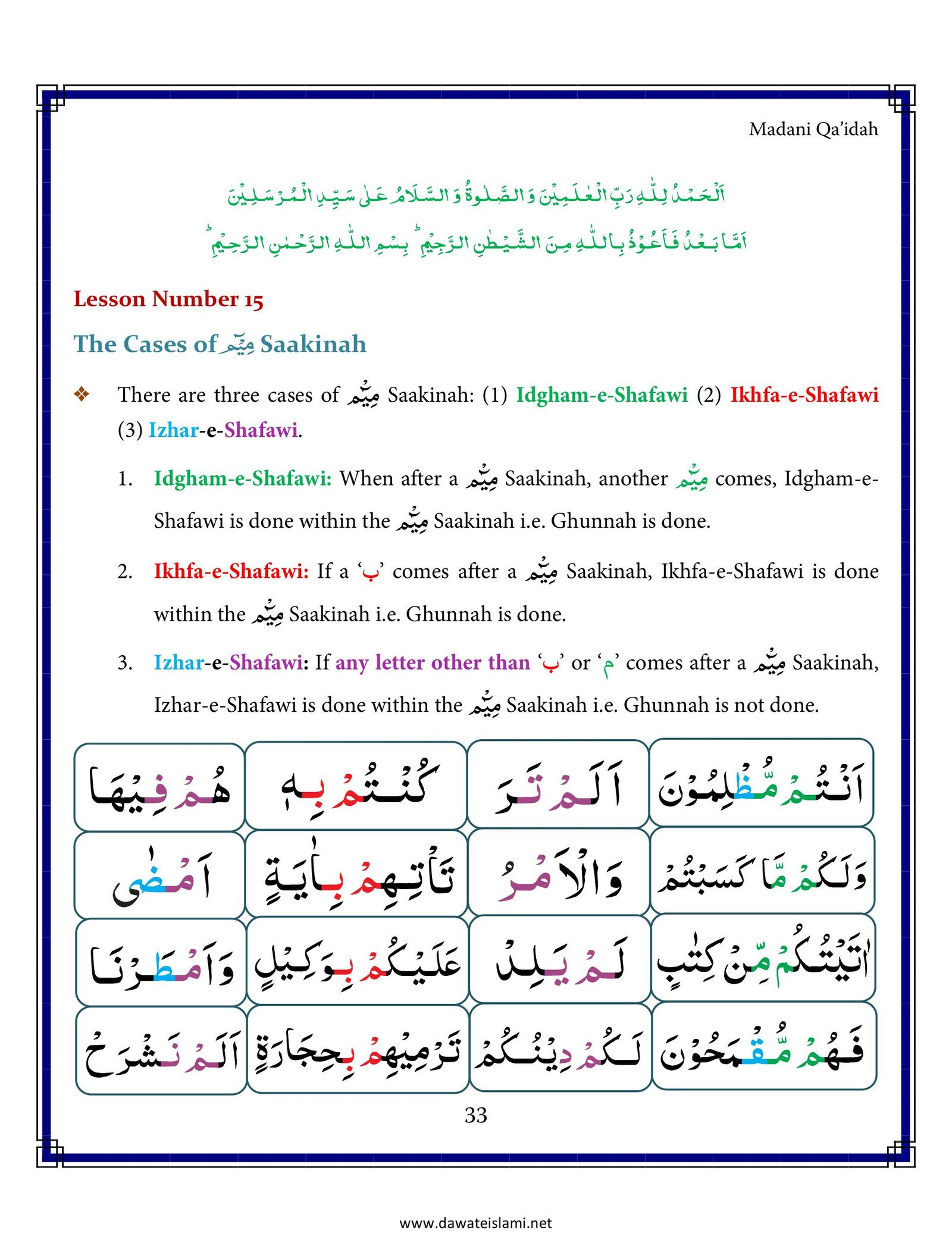
Welcome to Madni Qaida in English Page 44 at Learning Quraan. Lesson 15 explains the three cases of Meem Saakinah: Idgham Shafawi, Ikhfa Shafawi and Izhar Shafawi, with examples.
This page is part of Lesson 15: Meem Saakinah Rules. See every page on the Madni Qaida in English index, or learn with a teacher in our online Quran courses.
What is on Madni Qaida in English Page 44?
- Idgham Shafawi: Meem Saakinah before another Meem, with Ghunnah.
- Ikhfa Shafawi: Meem Saakinah before ب, with Ghunnah.
- Izhar Shafawi: before any other letter, no Ghunnah.
How to Practise This Page
- Meem Saakin followed by another Meem: Idgham Shafawi with Ghunnah.
- Meem Saakin followed by ب: Ikhfa Shafawi with Ghunnah.
- Any other letter after Meem Saakin: Izhar Shafawi, with no Ghunnah.
Lesson 15: The Three Rules of Meem Saakinah
Lesson 15 does for Meem Saakinah (مْ) what Lessons 12 and 14 did for Noon Saakinah. The word “Shafawi” means “of the lips”, because Meem is made with the lips. Again, the letter after the Meem decides the rule:
| Rule | When | How it sounds |
|---|---|---|
| Idgham Shafawi | Another م follows | The two Meems merge into one doubled Meem, with Ghunnah |
| Ikhfa Shafawi | ب follows | The Meem is hidden: the lips touch lightly and the sound is held in the nose (Ghunnah) |
| Izhar Shafawi | Any letter other than ب and م follows | The Meem is said clearly; no Ghunnah |
The page colours the three rules differently, so a child can see which one each box practises.
All Sixteen Examples on Page 44
Each row follows the same pattern from right to left: Idgham Shafawi, then Izhar, then Ikhfa Shafawi, then Izhar again:
| Example | Rule | Where it occurs |
|---|---|---|
| اَنْتُمْ مُّظْلِمُوْنَ | Idgham Shafawi | |
| اَلَمْ تَرَ | Izhar Shafawi | Surah al-Fil 105:1 |
| كُنْتُمْ بِهٖ | Ikhfa Shafawi | Surah Yunus 10:51 |
| هُمْ فِيْهَا | Izhar Shafawi | Surah al-Baqarah 2:25 |
| وَلَكُمْ مَّا كَسَبْتُمْ | Idgham Shafawi | Surah al-Baqarah 2:134 |
| وَالْاَمْرُ | Izhar Shafawi | |
| تَاْتِهِمْ بِاٰيَةٍ | Ikhfa Shafawi | Surah al-A‘raf 7:203 |
| اَمْضٰى | Izhar Shafawi | |
| اٰتَيْتُكُمْ مِّنْ كِتٰبٍ | Idgham Shafawi | Surah Al ‘Imran 3:81 |
| لَمْ يَلِدْ | Izhar Shafawi | Surah al-Ikhlas 112:3 |
| عَلَيْكُمْ بِوَكِيْلٍ | Ikhfa Shafawi | Surah al-An‘am 6:66 |
| وَاَمْطَرْنَا | Izhar Shafawi | Surah al-A‘raf 7:84 |
| فَهُمْ مُّقْمَحُوْنَ | Idgham Shafawi | Surah Ya-Sin 36:8 |
| لَكُمْ دِيْنُكُمْ | Izhar Shafawi | Surah al-Kafirun 109:6 |
| تَرْمِيْهِمْ بِحِجَارَةٍ | Ikhfa Shafawi | Surah al-Fil 105:4 |
| اَلَمْ نَشْرَحْ | Izhar Shafawi | Surah ash-Sharh 94:1 |
Points to Notice
- Izhar before Fa and Waw needs extra care. These letters are made close to the lips too, so the Meem can slip into a hidden sound. In هُمْ فِيْهَا keep the Meem clear before the Fa.
- Ikhfa Shafawi is soft. In تَرْمِيْهِمْ بِحِجَارَةٍ the lips close lightly, without pressing, while the Ghunnah is held.
- Idgham Shafawi shows a Tashdeed on the second Meem: فَهُمْ مُّقْمَحُوْنَ.
A Five-Minute Practice Plan
- Minute 1: learn the three rules from the table at the top.
- Minute 2: read the Idgham examples (right-hand column).
- Minute 3: read the Ikhfa examples, lips soft.
- Minute 4: read the Izhar examples, Meem clear.
- Minute 5: read the Check Yourself line below and name each rule.
Check Yourself
اَلَمْ تَرَ · كُنْتُمْ بِهٖ · وَلَكُمْ مَّا كَسَبْتُمْ · لَمْ يَلِدْ · لَكُمْ دِيْنُكُمْ · اَلَمْ نَشْرَحْ
Source: the page shown above is from the Madani Qa‘idah (English edition), Lesson 15, book page 33, published by Maktaba-tul-Madinah (Dawat-e-Islami). Quran references are given as surah and verse. Lesson notes written by Learning Quraan.
Madni Qaida in English: Page Directory
Jump to any page of the English edition, or go back to the full page index.
Explore Our Free Islamic Tools
Enhance your daily Islamic practices with our online interactive Islamic Tools:- Count daily recitations on our Digital Tasbih Counter.
- Find the Qibla direction with our Qibla Finder.
- Convert dates with the Hijri Date Converter.
- Search meaningful names with our Islamic Names Finder.
- Calculate obligations with the Zakat Calculator and Islamic Inheritance Calculator.
Get One-on-One Tutoring Support
Learn more about our qualified Quran teachers on our About Us page, review pricing on our Fee structure page, or visit our Contact Us page to book a free trial class.
← Previous: Page 43👉 Proceed to Page 45 – Lesson 16: Thick and Thin
Page images: Madani Qa’idah, published by Maktaba-tul-Madinah (Dawat-e-Islami), shown here as a study reference.
