
Madni Qaida in English Page 02 – Makharij: Places of Pronunciation for Arabic Letters
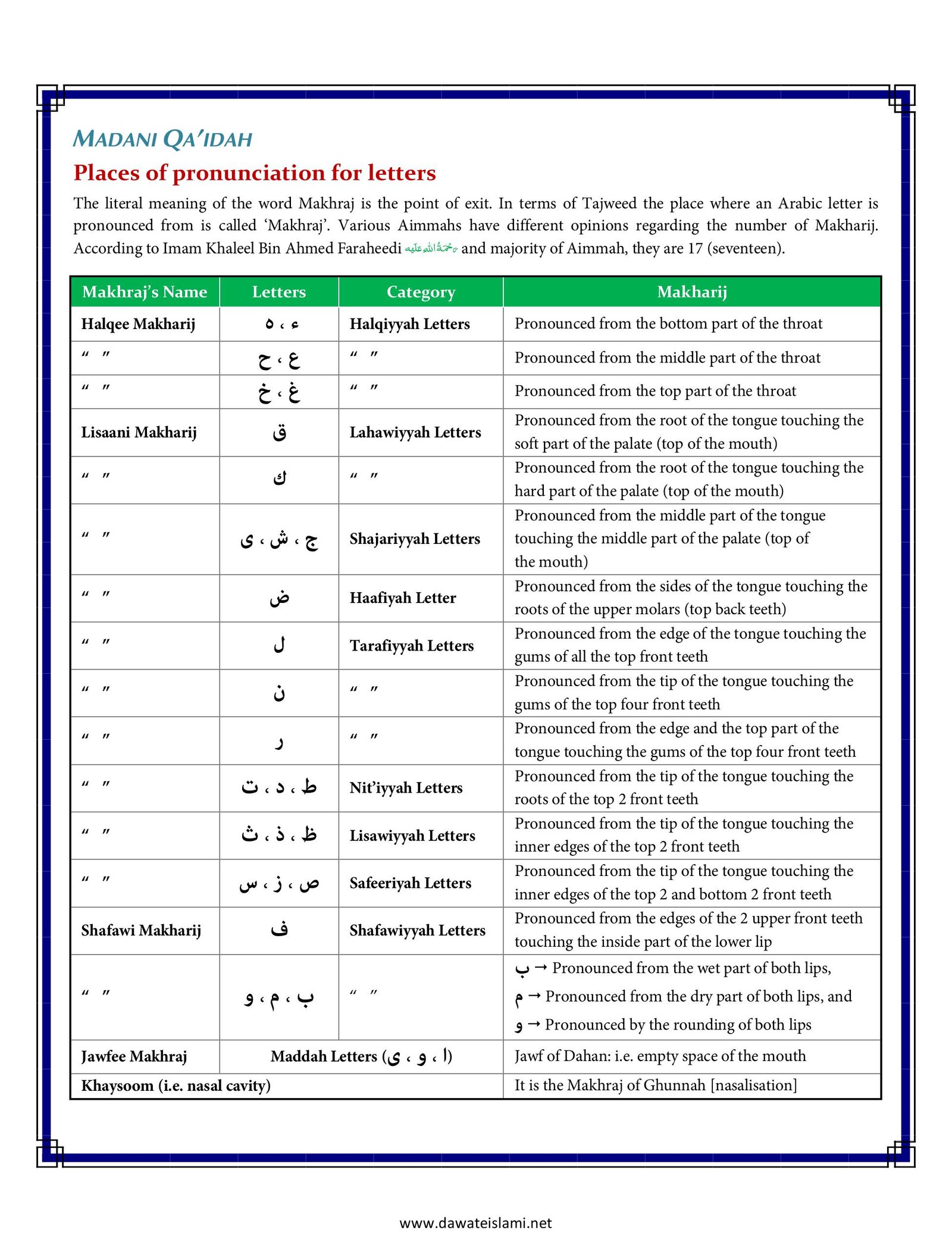
Welcome to Madni Qaida in English Page 02 at Learning Quraan. Page 2 gives the complete Makharij table: where each Arabic letter is pronounced from. It follows the view of Imam Khaleel bin Ahmad Farahidi and most scholars that there are 17 Makharij.
This page is part of the opening pages of the book. See every page on the Madni Qaida in English index, or learn with a teacher in our online Quran courses.
What is on Madni Qaida in English Page 02?
- The throat (Halqi) letters: ء ه from the bottom, ع ح from the middle, غ خ from the top of the throat.
- The tongue (Lisani) letters, grouped by name: Lahawiyyah, Shajariyyah, Haafiyah, Tarafiyyah, Nit’iyyah, Lisawiyyah and Safeeriyah.
- The lip (Shafawi) letters ف ب م و, the Maddah letters from the empty space of the mouth, and the nose (Khayshoom) as the place of Ghunnah.
How to Practise This Page
- Read the opening pages once with your child before starting Lesson 1, so they know what the book is for.
- Keep the Makharij chart and the articulation diagram nearby: you will come back to them in almost every lesson.
- Recite the du’a for study and Salat upon the Prophet ﷺ before each class to build a good routine.
The Places of the Letters, in Summary
This page is the book’s chart of the Makharij. A Makhraj (plural Makharij) is the place in the mouth or throat where a letter is made. The chart follows the count of Imam Khalil bin Ahmad al-Farahidi and most scholars of Tajweed: 17 Makharij. They sit in five areas:
| Area | Makharij | Letters | Practised in |
|---|---|---|---|
| Jawf (the open space of the mouth and throat) | 1 | ا و ی (as Letters of Maddah) | Lessons 7 and 17 |
| Halq (the throat) | 3 | ء ه · ع ح · غ خ | Lessons 4 and 12 |
| Lisan (the tongue) | 10 | ق ك · ج ش ی · ض · ل · ن · ر · ط د ت · ظ ذ ث · ص ز س | Lessons 1 and 4 |
| Shafatain (the lips) | 2 | ف · ب م و | Lessons 4 and 15 |
| Khayshoom (the nasal passage) | 1 | Ghunnah of Noon and Meem | Lessons 12 to 15 |
The Letter Groups Named on the Chart
The chart also gives each group of letters a name, taken from the part of the mouth that makes them. Knowing the names makes the later lessons easier to follow:
| Group | Letters |
|---|---|
| Halqiyyah (throat letters) | ء ه ع ح غ خ |
| Lahatiyyah (back of the tongue) | ق ك |
| Shajariyyah (middle of the tongue) | ج ش ی |
| Haafiyah (side of the tongue) | ض |
| Tarafiyyah (edge of the tongue) | ل ن ر |
| Nit‘iyyah (tip, at the gum line) | ط د ت |
| Lithawiyyah (tip, at the edges of the front teeth) | ظ ذ ث |
| Safeeriyah (whistling) | ص ز س |
| Shafawiyyah (lip letters) | ف ب م و |
How to Use the Chart
- Read it with page 6, the drawing of the mouth, which shows the same places as a picture.
- Learn one area at a time: the throat first, then the tongue, then the lips.
- Test the place, not just the sound: say the letter with a Sukoon after a Hamzah (اَبْ, اَقْ) and notice where the sound stops. This is the method used in many Tajweed books, including Faizan-e-Tajweed.
Source: the page shown above is from the Madani Qa‘idah (English edition), front matter, “Places of pronunciation for letters”, published by Maktaba-tul-Madinah (Dawat-e-Islami). The places and group names agree with Faizan-e-Tajweed (Dawat-e-Islami), pp. 16–17 and 20, and al-Muqaddimah al-Jazariyyah of Imam Ibn al-Jazari. Notes written by Learning Quraan.
Madni Qaida in English: Page Directory
Jump to any page of the English edition, or go back to the full page index.
Explore Our Free Islamic Tools
Enhance your daily Islamic practices with our online interactive Islamic Tools:- Count daily recitations on our Digital Tasbih Counter.
- Find the Qibla direction with our Qibla Finder.
- Convert dates with the Hijri Date Converter.
- Search meaningful names with our Islamic Names Finder.
- Calculate obligations with the Zakat Calculator and Islamic Inheritance Calculator.
Get One-on-One Tutoring Support
Learn more about our qualified Quran teachers on our About Us page, review pricing on our Fee structure page, or visit our Contact Us page to book a free trial class.
← Previous: Page 01👉 Proceed to Page 03 – Title Page
Page images: Madani Qa’idah, published by Maktaba-tul-Madinah (Dawat-e-Islami), shown here as a study reference.
